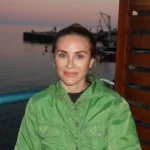
On September 24, Kazakhstan’s Supreme Court denied asylum to Russian activist Yulia Yemelyanova, clearing the way for her extradition to Russia, scheduled in February 2027. Yemelyanova, known for her work at Navalny’s headquarters and her advocacy for Russian political prisoners, fled the country in 2022 after being accused of theft, a charge she and her supporters view as politically motivated retaliation for her activism. She was arrested in 2025 during a layover in Kazakhstan while traveling to Vietnam.
Yemelyanova was detained at the Almaty airport on September 1, 2025. She was on the interstate wanted list “on suspicion of committing property crimes.” The activist, on her way to Vietnam, had a layover in Kazakhstan and had to pass through border control unexpectedly, which led to her arrest.
The Russian activist volunteered at Navalny’s St. Petersburg headquarters, helping Russian political prisoners. In 2022, she left Russia and moved to Georgia. There, she was reportedly participating in the Emigration for Action and Just Help projects, which supported Ukrainian refugees in Georgia with medical and social issues.
Her departure from Russia coincided shortly after the Kalininsky Court of St. Petersburg received a criminal case against her under the article on theft (Part 2 of Article 158). Judging by the information from the leaked databases, Yemelyanova was accused of stealing a mobile phone worth 12 thousand rubles from taxi driver Dilmudor Yusupov, who drove her in August 2021. The criminal case against the Russian activist in the “Anti-War Committee” was called “politically motivated”. Human rights activists believe that it had signs of fabrication, as Yemelyanova first saw the phone allegedly stolen by her in the office of the police station, to which she was brought from home. It was not withdrawn from her home. The taxi driver also suspiciously turned to the police with a statement about the theft only a month later.
In January 2026, the Prosecutor General’s Office of Kazakhstan granted Russia’s request for the extradition of Yemelyanova. The execution of the decision was subsequently suspended, pending the completion of the appeal against the refusal to grant her asylum. Thus, the outcome of the trial is directly related to the further possibility of her extradition to Russia.
Her lawyers and human rights defenders were not notified by the authorities, and learned of it after a visit to the pre-detention center. The Anti-War Committee notes that the document was issued bypassing procedure and with violations, as Kazakh authorities are still considering the activist’s application for asylum:
“Back in October 2025, the Prosecutor General’s Office guaranteed that the issue of extradition would not be considered until all administrative procedures relating to her asylum claim were completed.”
Her defense decided to appeal the actions of the Kazakh authorities to the Supreme Court.
The courts of first instance and appeal had previously dismissed Emelyanova’s claims. The human rights organization Kovcheg reported violations of the right to defense during the proceedings. In particular, at one of the hearings, Yemelyanova was not allowed to participate remotely, while her lawyer was on a flight. The court of first instance also refused to attach to the case materials the urgent appeal of the UN Special Rapporteur on the situation of human rights in Russia, Mariana Katsarova.
In July, Yemelyanova addressed an open letter to the President Kassym-Jomart Tokayev with a request to prevent her extradition. Representatives of the Anti-War Committee of Russia assess the risk of her extradition after the completion of judicial procedures as critically high.
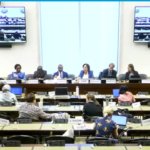
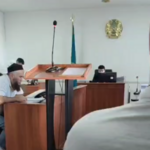
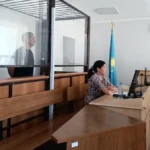
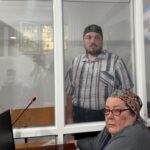
On September 24, the cassation hearing of the case was held. The Supreme Court refused her demand for asylum and confirmed her extradition to be in February 2027.
The country has not previously systematically extended such extradition arrests – after 12 months of detention, those wanted by another state were usually allowed to leave for a “third” country. However, the human rights organization Kovcheg believes that “Kazakhstan is changing the practice of treating arrested persons at the request of other countries, including Russia.”
“It is becoming almost impossible to get out of Kazakhstan for a safe country. In addition, according to the project “Support for Political Prisoners. Memorial,” Kazakhstan has not granted asylum to a single Russian since the beginning of Russia’s invasion of Ukraine and has already extradited four politically motivated Russian security forces,” the human rights organization notes.
Since the beginning of the year, the Kazakh authorities have agreed to extradite Chechen activist Mansur Movlaev, deserter Semyon Bazhukov and IT specialist Alexander Kachkurkin to Russia. More than ever, Kazakhstan’s justice system seems to serve the Kremlin’s interest.