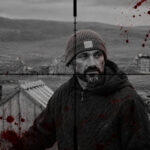
UN Working Group on Arbitrary Detention finds Kazakh journalist’s imprisonment arbitrary and calls for his immediate release. In Opinion No. 18/2026, the UN Working Group has concluded that Duman Mukhammedkarim was jailed for his journalism and denied a fair trial.
Yet on 12 May 2026, the UN Working Group on Arbitrary Detention published Opinion No. 18/2026, recognizing the imprisonment of Duman Mukhammedkarim as contrary to eight articles (2, 3, 7, 9, 10, 11, 19 and 21) of the Universal Declaration of Human Rights and to six articles (9, 14, 15, 19, 25 and 26) of the International Covenant on Civil and Political Rights (ICCPR). It ended its decision by calling for his immediate release.
Duman Mukhammedkarim, an Almaty resident, is an opposition journalist and the author of the YouTube channel “Ne Deidi” (“What are they saying”), where he openly criticized the Kazakh authorities. He stood as an independent candidate in a local election in March 2023 but was not elected, and his activism led to repeated detentions. In 2024, he livestreamed an interview with the exiled co-founder of Democratic Choice of Kazakhstan (DCK), a party designated “extremist.” When the co-founder mentioned needing funds for legal fees in France and other jurisdictions pursuing him, Mukhammedkarim said he would donate, encouraged viewers to do the same, and asked aloud whether this would amount to financing an extremist. The co-founder clarified that only the DCK, not he personally, had been declared extremist. The journalist later posted eight ways of financially supporting the DCK’s leaders in the comments, and published further two videos in which he criticized the Government and sarcastically suggested that viewers should not attend peaceful protest rallies.
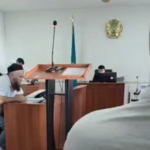
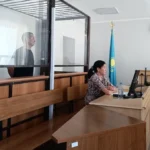
Duman Mukhammedkarim was arrested on 28 May 2023 for “violating the order of a peaceful assembly” and given 25 days of administrative detention. On 22 June, the day he was due to be released, he was instead charged under articles 258 and 405 of the Criminal Code and placed in pretrial detention, where he has remained since. After a trial held behind closed doors – on dubious grounds -, he was sentenced to seven years for “financing extremism” and “participating in a banned organization,” plus a three-year ban on socio-political activities. The Court of Appeal upheld the sentence in November 2024, and he was transferred to the Kyzylorda detention facility at the end of the year.
The complaint submitted to the Working Group put forward three grounds of arbitrariness.
First, the label of “extremism” was used arbitrarily. The source explains that Kazakh law defines it vaguely, extending to non-violent conduct, and the decision banning the DCK was never published, so Duman Mukhammedkarim could not know what was prohibited. No violence was alleged against the DCK, its co-founder or the journalist, and even government-appointed experts found none. Several witnesses testified that the interview contained no call to fund the DCK, only to cover the co-founder’s personal legal costs, and that Mukhammedkarim had no affiliation with the party. A journalistic interview, the source argues, cannot constitute “participation” in a banned organization.
Second, his prosecution disregarded the protection of journalism under international law. Interviewing an opposition figure and discussing peaceful political change fell within articles 19 and 25 of the Covenant, and his freedom’s restriction was not clearly justified by law, served no legitimate aim linked to national security or public order, and was grossly disproportionate: Duman Mukhammedkarim should not have been sentenced to seven years of imprisonment for doing journalistic work.
Third, his right to a fair trial was denied. The court closed the hearing without adequate justification and withheld from the defence the 2018 decision designating the DCK as extremist, while treating it as conclusive. It relied almost entirely on government-appointed experts who used non-statutory definitions, describing extremism as “deviation from the centre” and participation as “being enthusiastic about something.” It also ignored 18 testimonies favourable to the defendant, undermining the presumption of innocence. Finally, the complaint stressed on the lack of court’s impartiality: the judge’s prior written use of the term “convict”, the summary denial of both recusal motions without meaningful deliberation and the court’s refusal to order the prosecution to disclose to the defence the decision banning DCK, which enabled the prosecution to rely on the secret legal reasoning for DCK being designated an extremist organization while the defence was unable to contest this.
The UN working group gave three months to the Kazakh government for providing information about Duman Mukhammedkarim and to clarify the legal provisions justifying his continued detention. Yet, its response was submitted two days after the deadline given by the UN working group and without a request for an extension, and therefore was not assessed. The Working Group found the detention arbitrary under Category I, as the DCK ban was unpublished, the notion of participation unjustified and the motives for his arrest dubious. It also found that his detention resulted from the exercise of his rights under articles 19 and 25, which falls under Category II. The Working Group finally stated that “no trial should have taken place,” while confirming the violations of his fair-trial rights – presented above, falling under Category III.
The UN Working Group concluded its report by noting Duman Mukhammedkarim’s conditions of detention:
“The conditions in the cell are extremely restrictive, with poor ventilation, round-the-clock lighting, and walks provided extremely rarely or not at all, in violation of rule 43 of the United Nations Standard Minimum Rules for the Treatment of Prisoners (the Nelson Mandela Rules). The source [Duman Mukhammedkarim’s] reports signs of anxiety-depressive disorder, sleep disturbances and low mood, with no psychological or psychiatric care provided and no assessment carried out of the risk of self-harm described as extremely restrictive.The Working Group also notes that the institution’s own records confirm a hunger strike from 1 to 20 November 2025 which was not mentioned in the Government’s response, and that disciplinary measures appear to have been applied systematically as a tool of pressure rather than correction”.
By September 2026, the journalist had spent more than 600 days in solitary confinement and had twice tried to harm himself, first with an overdose of medication, then by swallowing batteries, a lighter and other objects. His lawyer is calling for a medical examination as his health deteriorates.
The Working Group asked for his immediate release, an enforceable right to compensation and other reparations, and an independent investigation. It requested that the source and the government report on follow-up within six months, including on his release, any investigation and legislative changes, while reserving the right to act on its own if new concerns arise or if the government fails to meet, again, this deadline. Yet, six months have passed since this opinion was published. Although it is unclear whether the government responded to the UN Working Group within the deadline, it is certain that Dumman Mukhammedkarim remains in prison.
Based on past experience, the Kazakh authorities have never complied with the demands of the UN Working Group on Arbitrary Detention, nor have they ever, or almost ever, complied with the decisions of UN treaty bodies regarding individual complaints.
Marat Zhylanbaev, an opposition activist and well-known marathon runner, is currently in detention. The UN Working Group on Arbitrary Detention has also issued a decision on April 2025 in his case, demanding his immediate release and the payment of financial compensation for his unlawful detention. The complaint was prepared by George Clooney foundation for justice.
The link of UN Working Group on Arbitrary Detention’s Opinion No. 18/2026: https://www.ohchr.org/sites/default/files/documents/issues/detention-wg/opinions/session105/a-hrc-wgad-2026-18-kazakhstan-aev.pdf