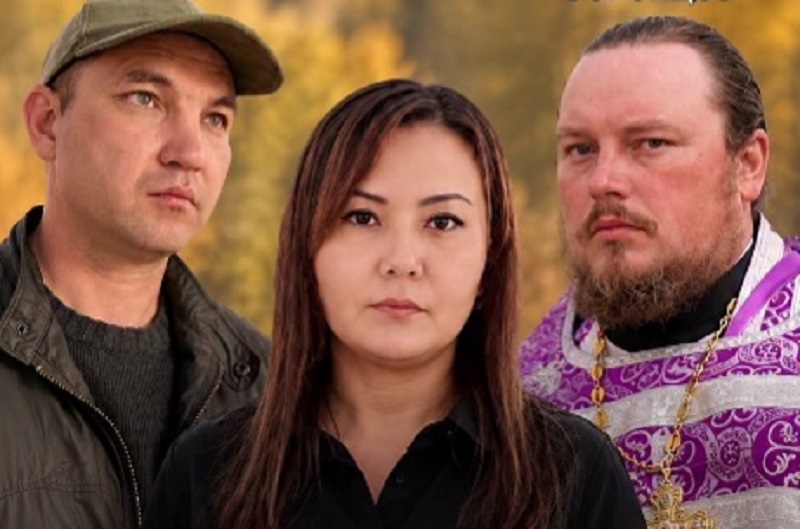
On November 4, an independent expert council of Kazakh human rights defenders added three people to Kazakhstan’s list of political prisoners: a former Russian Orthodox priest who criticized the war in Ukraine, and two activists jailed over Facebook posts. Those activists join 32 other recognized political prisoners in the country, among the public figure Marat Zhylanbayev, journalist Duman Muhammedkarim, leader of the NGO “Atajurt” Beksat Maksuthan and others.
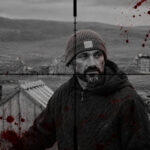
The council first examined the case of Yakov Vorontsov, a former priest of the Russian Orthodox Church (ROC). In 2022, he publicly spoke out against Russia’s war in Ukraine, which led him to be defrocked, and supported the creation of a Orthodox community in Kazakhstan independent of the Moscow Patriarchate. In August 2023, a criminal case was opened against him for “inciting discord” over social media posts criticizing the ROC for supporting the war. It was dismissed in May 2025 due to lack of criminal record. In February 2026, after a search, Vorontsov was detained again and held under administrative arrest for 10 days. He was then prosecuted for the illegal acquisition and possession of a psychotropic substance with, at first, the intention to sell. The charge of organizing a drug den was dropped after. While in detention, he was placed in a psychiatric institution. In October, an Almaty court sentenced him to six years in prison, however an amnesty reduced the term to four. Vorontsov and his supporters link the prosecution to his pro-Ukrainian stance and his lawsuit against the Department of Justice, who refused to register his church. The defense still claims that there is no evidence he was involved in possessing prohibited substances. The trial was held behind closed doors.
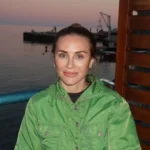
The second case assessed by the council was Gulnaz Serikbayeva’s imprisonment. The civil activist from Kyzylorda was a member of the public association “Atajurt”, documenting cases of discrimination and violation of rights of ethnic Kazakhs in China. On May 28, 2024, the court dismissed the administrative proceedings against her on charges of spreading false information on a social network for lack of offence. In February 2026, Serikbayeva was placed under administrative arrest for 10 days in connection with a publication in support of the political prisoner Marat Zhylanbayev, who was sentenced in 2023 to seven years in prison on “extremist” charges, which he denied. In March 2026, she was charged with “inciting violence” over her Facebook posts and placed in custody. During detention, there were reports of a suicide attempt. On July 2, 2026, the court in Kyzylorda sentenced Serikbayev to 3 years of imprisonment under Article 174 Part 1 of the Criminal Code. Serikbayeva dismissed the accusations and claimed that she had only exercised her constitutional right to express her opinion.
The third newly-recognized political prisoner is Nurzhan Sembayev. The activist and artist from Semey was in the city square during the protests of January 2022. He was charged with “participation in riots” and “assault on buildings”. In December of the same year, the case was dismissed for lack of criminal record. In 2023, he filed a claim for compensation for illegal detention and obtained payment of 2 million tenge from the state. Yet, in May 2024, he was detained again and interrogated as part of a case related to the January events.
On 3 February 2026, Sembayev was detained, this time, at his workplace. He was accused of “inciting to arrest Tokayev and to overthrow Putin”, through his Facebook posts. On that basis, he was charged with “participating in the activities of a proscribed organization” and “financing an extremist organization”. On 22 July 2026, a court in the city of Semey sentenced Nurzhan Sembayev to six years in prison. In addition, he was banned from engaging in public and political activities for three years.
While the number of recognized political prisoners reaches 35, Kazakhstan’s authorities deny that such political persecution exists. President Kassym-Jomart Tokayev explained in a January 2024 interview with the state newspaper Egemen Qazaqstan “that censorship, tailor-made laws and punitive bodies are the main signs of political persecution”, and that “none of them exist in Kazakhstan.” In May 2026, he also claimed that “Kazakhstan is constantly creating the conditions for a full protection of its citizens’ rights and freedoms”, a statement human rights groups refute every day.