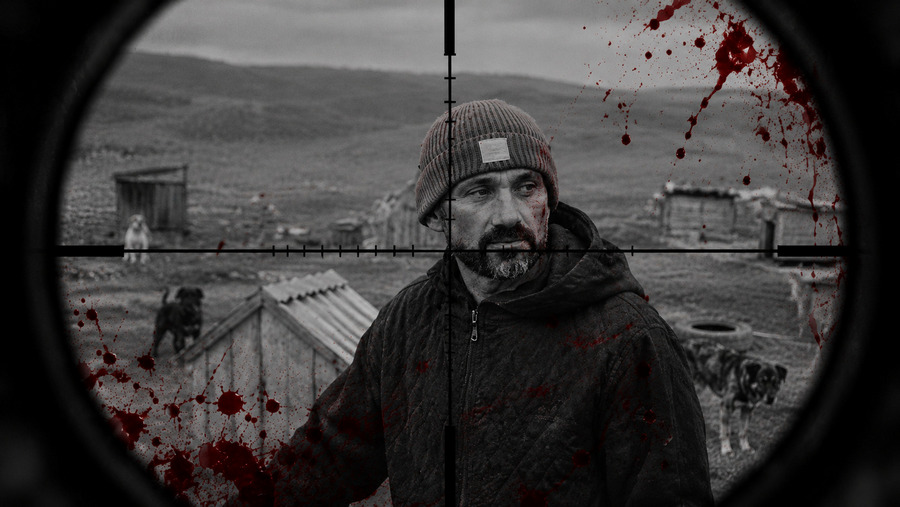
In Kazakhstan, those who take in abandoned animals are working in an increasingly hostile climate. The violent death of Vladimir Tepliakov, founder of a shelter for stray dogs near Almaty, adds to a series of attacks, lawsuits and legislative reversals. Volunteers say the situation keeps deteriorating, and that the state, far from helping them, obstructs their work.
A shelter founder’s killed near Almaty
According to animal rights activists and several media outlets, Vladimir Tepliakov, founder of the “Tvardovsky House” shelter, was shot dead near Almaty. He was hit by several bullets, including one to the back of the head. The investigation is ongoing and the authorities have released no further details, citing Article 201 of the Criminal Procedure Code on the secrecy of investigations.
Founded in 2015 and named after his late son, the shelter was at the heart of Tepliakov’s life. He went there every day to feed the dogs, clean the enclosures and monitor their health. For those who help homeless animals, his death is a heavy blow. About 90 dogs were at risk of being abandoned in the steppe; They have since been transferred to another shelter.
A series of attacks on shelters
This murder, widely covered by Kazakhstan’s independent press, is not an isolated case.
As a reminder, at the end of October last year, two unknown men armed with rebar broke, at night, into Natalia Sulzhik’s farm, which houses the “White Bim” shelter. They seriously injured an employee who was staying overnight. He is only now recovering, and the police have not identified the attackers.
In Mid-July this year, in Konaev, a city near Almaty, Nina Kolganova, who sheltered cats in her home, was violently detained. A police officer and animal-capture officers tried to enter her apartment without instructions or a court order. She refused them entry, a scuffle broke out, and police cited “resisting law enforcement.” The woman was literally dragged, without shoes and in her home clothes, to the police station. The officers then locked the doors where the animals were and killed 19 of them, according to Nina’s daughter who remained in the apartment. They left alive only a few purebred animals, and another cat who managed to hide.
Shelters are also targeted by authorities
Nina Kolganova’s case shows that shelters are not only targeted by unknown groups but also the authorities. Another example of it is Evgenia Mamaeva’s situation. She is the owner of the Zoohome shelter, which has rescued more than 800 animals since 2020. This year, Evegnia is being sued by the land committee for using her land for purposes other than agricultural production. The state intends to take back the plot, which she bought in installments, without compensation or a replacement parcel. Demolition of the buildings would also be at her expense.
“Shelters are dying. It has never been as hard as in these years; even a year ago it was easier,” she laments. “Every shelter, every volunteer does the state’s work for free. And I have never heard of any help from the state. At the same time, we are being destroyed in the literal sense of the word.”
On top of their daily work at the shelter, volunteers now have to spend money, time and energy on lawsuits brought by government bodies. And the situation is expected to worsen further in Kazakhstan, as the legal framework is evolving- and not for the better.
The cherry on the cake: the legal framework for stray animals is tightening
The legal situation of shelters has deteriorated recently. In May, the provisions of the law on the responsible treatment of animals, in force since 2021, were repealed, which required local authorities to provide shelters with information or material support. The “Capture-Sterilize-Vaccinate-Release” program, modeled on the European approach, was abandoned at the same time, while five years ago this program was considered progressive, humane and effective: many shelters had opened, and animals with green ear tags, a sign they had been sterilized and vaccinated, were a common sight on city streets.
On the evening of May 19, President Kassym-Jomart Tokayev signed the amended version of the law. Its initiators argue that the program failed: the number of stray dogs and cats did not fall, and (allegedly) attacks on people increased. They say the only way out is a return to killing stray animals. Under the new rules, strays are trapped, held for five days, then euthanized. Domestic cats and dogs left unsupervised meet the same fate if no one claims them after 60 days.
Some studies treat animal welfare as an indicator of how developed a country’s state and society are. World Animal Protection’s Animal Protection Index, for instance, ranks 50 countries on a range of animal welfare indicators and places Belarus and Iran among the lowest. In Western and Northern Europe, the presence of strong public institutions taking care of such matters make the problem far less acute. As for Almaty’s American sister city, Tucson, it has 136 shelters in its metropolitan area, including a municipal one. Kazakhstan has overtaken America only in the time zone: Almaty is ahead of Tucson by many hours, but on this measure the gap between them is just as wide. For a country that wants to be counted among the world’s modern economies, how it treats its most defenseless inhabitants is not a side issue. It is one of the places where that ambition is tested, and where, for now, the distance between words and reality is easiest to see.
The dogs from the “Tvardovsky Dom” shelter have now been moved to a neighboring shelter, and some have already found new homes with local residents. Local authorities are providing their full cooperation. However, all of this came at the cost of a human life and sparked a wave of outrage in the media and on social media.