Three journalists have been sentenced this year under Article 147 of the Criminal Code, which criminalizes “the dissemination of personal data that causes significant harm to a person’s rights and legitimate interests.” In each case, the information in question had been drawn from open court databases or social media. The law, in force since 2016, has been increasingly enforced and requires an individual’s consent before their personal information can be shared publicly. Ever since, the article has been used in order to silence independent journalists and activists.
In Almaty, a criminal case against journalist Alexandra Alekhova stemmed from her coverage of a 2022–2024 dispute between tenants and owners at the market “Kenzhekhan.” Alekhova had reposted material noting that one of the activists defending the tenants’ rights had a prior criminal record and was registered with the police. Following a complaint from the activist, investigators deemed the disclosure an illegal dissemination of personal data. Alekhova’s defense argued that the information came entirely from public court records. While police did not consider as a violation the original post from a popular Telegram channel, they treated Alekhova’s repost as one. The International Foundation for the Protection of Freedom of Speech “Adil Soz” pointed out that information loses its confidential status once it has already been made public, meaning its further circulation should not legally count as disclosing a secret. Despite this argument, Alekhova was sentenced on August 3 to three years in prison, with the sentence deferred for five years, and was barred from practicing journalism for three years.
Journalist Oleg Gusev faced prosecution over similar circumstances. His case centered on a report about the Kenzhekhan market scandal, which cited publicly available judicial records concerning the convictions of one of the parties involved, Elena Sadvakasova. Judges and court staff who had published the same information in the judiciary’s official case management system faced no consequences, since Kazakh law treats such records as public. Gusev, however, was charged over his links to earlier Alekhova publications. He received a three-year suspended sentence along with an unconditional ban from journalism for the same period. Pending his appeal, Gusev continued posting on social media and giving interviews despite the ban. He alleges that his prosecution is retaliation orchestrated by oligarch Andrei Lavrentiev, owner of Qarmet and several car factories, claiming his reporting had genuinely damaged Lavrentiev’s interests. With Gusev sidelined as the most vocal figure pursuing accountability, he argues, Lavrentiev now faces little scrutiny. Other journalists who criticized him have similarly ended up imprisoned or in pre-trial detention.
A comparable case unfolded recently, on September 8, when the Turkestan City Court sentenced journalist and activist Kural Seyitkhanuly to three years in prison. Arrested in May, he was accused of disseminating personal data belonging to Lyazzat Asanova, a blogger and editor at the state-affiliated newspaper “Aimak tynysy KZ.” Journalist Amangeldy Batyrbekov has argued that the information Seyitkhanuly published was not confidential and had already circulated on social media, a claim Asanova disputes. Seyitkhanuly has been a prominent voice on socio-political issues in Kazakhstan for many years. During the 2024 referendum on the construction of a nuclear power plant, he served as an election observer in Turkestan. After he reported irregularities at his polling station, he was summoned by police for questioning.
These cases are part of a nationwide crackdown targeting independent journalists and Kazakh activists, with the aim of silencing them. Over the years, the pressure on them has intensified considerably. The KIBHR itself had its website temporarily shut down on Friday because an article about the arrest of an environmental activist had displeased local authorities.
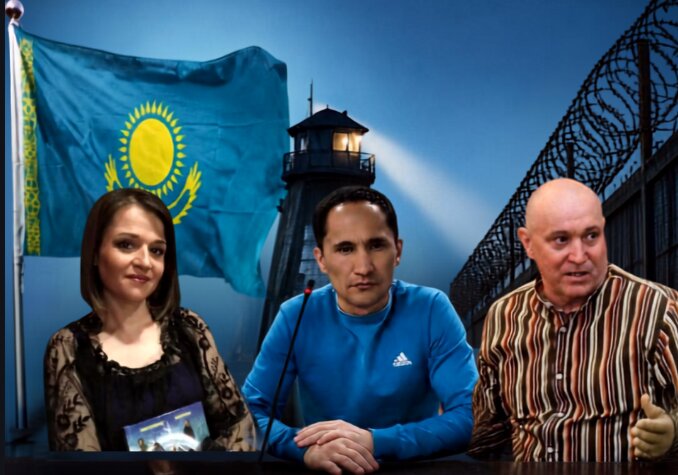
PICTURE: Generated with assistance of AI