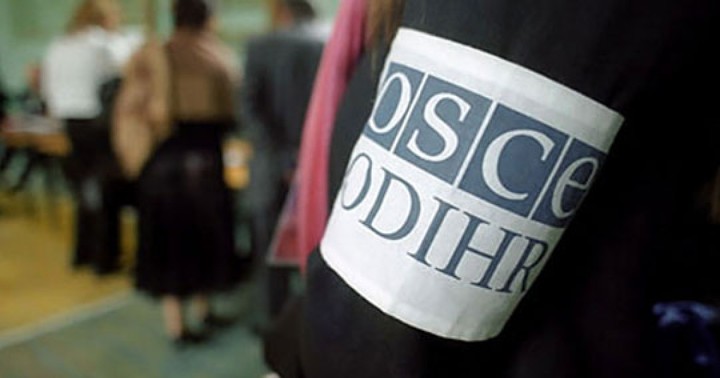
Lack of political competition, pressure on voters and observers, restrictions on civil liberties, media self-censorship, lack of access to vote counting, a discrepancy between the actual number of voters and the reported figure, and procedural issues: the international observer mission of the OSCE Office for Democratic Institutions (ODIHR) assessed the Kurultai elections as “the most interesting in the country’s history.”
To provide some context, the 23 August 2026 early parliamentary elections followed the 15 March referendum on the new Constitution which entered into force on 1 July. This led to a monocameral system (Kurultai), to the dissolution of the parliament and to the President calling early parliamentary elections.
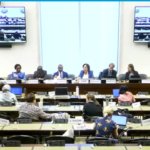
On August 24, the OSCE observer mission presented its preliminary findings in Astana. What was observed and documented in the report is hardly consistent with a truly fair and democratic expression of the will of the people -as required of OSCE participating States- although the observer gave a positive assessment of the technical level of preparation. The EU also acknowledged “the efforts made by the Kazakh authorities to organise these elections in a well-prepared and orderly manner, despite the short time between calling the elections and their organisation”, while recognizing that the election’s conditions were not aligned with international standards for democratic election.
A year ago, President Tokayev criticized the organization sharply, saying that Kazakhstan is inherently a democratic state and that the country has worked hard to become one. He dismissed the OSCE’s assessments as irrelevant to him, arguing the organization is heavily biased. He went on to say he isn’t concerned by the OSCE’s evaluations, even though Kazakhstan remains a member state, and the OSCE’s election assessments carry real weight for the democratic world.
Below are selected excerpts from the 26-page report, which is available in English, Russian and Kazakh.
Summary
The early parliamentary elections on August 23, despite good technical preparations, took place in an environment lacking political pluralism. Political choice was limited due to the absence of clear political alternatives, as all parties participating in the elections supported the policies of the incumbent president. The new “Adilet” party enjoyed an unwarranted advantage. The election administration enjoyed the trust of the participating parties, although the transparency of the decision-making process was limited. The legal framework, which was substantially revised shortly before the election with limited public debate, contains a number of provisions that do not meet international standards for democratic elections, including those regarding fundamental rights related to political participation. Women remain significantly underrepresented. Although voters had access to a range of media outlets, media pluralism remained limited, and restrictions on the media and pressure on journalists were a cause for concern. The media outlets monitored by observers provided limited editorial and analytical coverage of the elections, which restricted voters’ ability to make an informed choice.
Legislation
Despite a series of amendments, the legal framework still falls short of several international standards and OSCE commitments on democratic elections. It contains certain unjustified limits on voting rights and on legal channels for contesting results, and lacks adequate safeguards to ensure accountability and transparency in campaign financing. The changes were pushed through shortly before the vote, after a process that left little room for public input -running counter to international good practice – and left most of ODIHR’s earlier recommendations unaddressed. Vague, broadly worded provisions, particularly around foreign funding of campaign activities and what counts as permissible critical media coverage during the campaign, led to calls for clarification as the process unfolded, calls the authorities failed to answer with adequate legal clarity.
The law also makes no provision for independent candidates to run, which conflicts with international standards and past ODIHR guidance. It sets a combined 30 percent quota for women, youth, and people with disabilities, to be reflected in seat allocation as well. Yet, the way this quota is structured still falls short of relevant international standards and earlier ODIHR recommendations.
The legal framework grants political parties broad powers and control over the allocation and exercise of mandates, which contradicts OSCE commitments and international standards.
Competition
As noted by some interlocutors of the Independent International Election Observation Mission (IEOM), the absence of parties representing a genuine political opposition, as well as the denial of the right to independently nominate candidates in parliamentary elections, limited political participation, pluralism, and competition in the elections. The parties’ campaign platforms and slogans addressed a wide range of social and economic issues; however, all parties participating in the election supported the policies of the incumbent president. Although the parties generally had the opportunity to freely reach out to voters, significant disparities in resources affected the level playing field during the election campaign. The newly registered Adilet Party, which had merged with the former ruling Amanat Party, dominated the election campaign by holding the largest and most visible campaign events, drawing on the organizational structures, networks, and resources inherited from Amanat. It is interesting to note that some of Adilet’s large-scale events coincided with free public events organized by municipalities or other government agencies. Taken together, these factors gave the “Adilet” party an unfair advantage and blurred the line between the state and the party, which is contrary to OSCE commitments.
Freedom of Expression
Some of the IEOM’s interlocutors expressed concern that broadly worded restrictions on online content and enforcement measures – including content removal- that remain in place during the election campaign could lead to the suppression of political self-expression and critical views.
The media market is controlled by the state through direct ownership and non-transparent budgetary subsidies. These factors, along with expressed concerns about state influence on editorial content, limit media pluralism, despite the large number of registered media outlets. Long-standing concerns about arrests and pressure on independent journalists lead to widespread self-censorship. Numerous recent cases of intimidation and harassment of critical online journalists and bloggers remain of concern, even though some investigations by authorities took place.
Election Observation
The law provides for election observation at both the national and international levels. Amendments to the 2026 Election Law, which extend the ban on foreign funding to any election-related activity, are worded too broadly and vaguely, resulting in varying interpretations by the authorities. This has created unjustified obstacles to the work of civilian observers- contrary to OSCE commitments- and has led some civil society organizations to refrain from participating in election observation.
Discrepancy Between the Reported Turnout and Actual Turnout
Throughout the election’s day, observers noted significant discrepancies between the number of voters they saw casting ballots and the officially announced turnout figures. More than one-third of the vote-counting processes observed received a negative assessment due to significant procedural violations and omissions during both the verification and counting phases.
Transparency was further undermined by the failure to publish preliminary results on election night. Overall, the significant discrepancies between voter turnout and official turnout figures, as well as the problems noted during the vote counting process, raise serious concerns regarding the integrity of these stages of the process and whether the ballots were counted and reported fairly, as required by paragraph 7. 4 of the 1990 OSCE Copenhagen Document.
Restrictions on Civil Rights and Freedom
The Constitution guarantees fundamental rights and freedoms; however, citizens’ ability to participate in political life through freedom of association, peaceful assembly, and freedom of expression remains limited, and most of the ODIHR’s previous recommendations in these areas have not been implemented. Many interlocutors of the independent observation mission stated that since 2023, the situation regarding respect for fundamental freedoms and the rule of law has significantly deteriorated.
Meanwhile, IEOM observers reported concerning signs of pressure being exerted on voters. For instance, according to the report, in 6% of the polling places monitored, voters were seen taking photos of their ballots. The observers heard some voters explain that these photos would serve as proof for their employers, to show which candidate they had voted for.
Vote Counting
At 25 polling stations, the results protocols were not fully completed and were not filled out with a pen; at 50 polling stations, the numbers were not read aloud before being entered into the protocol. Four protocols had been signed in advance by members of the election commission. At 37 polling stations, the results protocol was not posted for public review, and at 32 polling stations, observers from the Independent Election Observation Mission (IEOM) did not receive a copy, even though they are entitled to one.
Many IEOM observers reported transparency issues during the vote count, issuing negative assessments in 29 cases and noting that not all observers had a clear view of the counting process in 28 cases. Overall, the problems identified during the vote counting raise serious concerns about the integrity of these stages of the process, as well as whether the ballots were counted and the results of the count were accurately reflected in the reports, as required by paragraph 7.4 of the 1990 OSCE Copenhagen Document.
At 25 election commissions, IEOM observers faced restrictions on their monitoring activities, and at 26 election commissions, not all those present had a clear view of the vote-counting process. IEOM observers reported inadequate facilities and overcrowding in 10 and 8 district-level election commissions, respectively.
They also reported a number of procedural issues, such as district-level election commissions making changes to the results protocols without a prior decision by the district-level election commission (in 7 district-level election commissions), district-level election commissions filling out the protocols only after arriving at the district-level election commission (in 12 district-level election commissions), as well as two cases of deliberate falsification of results or protocols.