In Kazakhstan, two separate cases involving charges of attempted coup d’Etat have received starkly different treatment from the justice system – a discrepancy that raises troubling questions on the country’s justice system and its neutrality.
The first case concerns five activists accused of planning mass riots without giving any reasons. Held in custody since July 2025, their trial started in March 2026. They were initially sentenced to one year and two months of imprisonment but were subsequently released after their sentence was commuted to two years and one month of restricted freedom. On September 4, the activists were finally released to their home city, Karaganda, after over a year of detention.
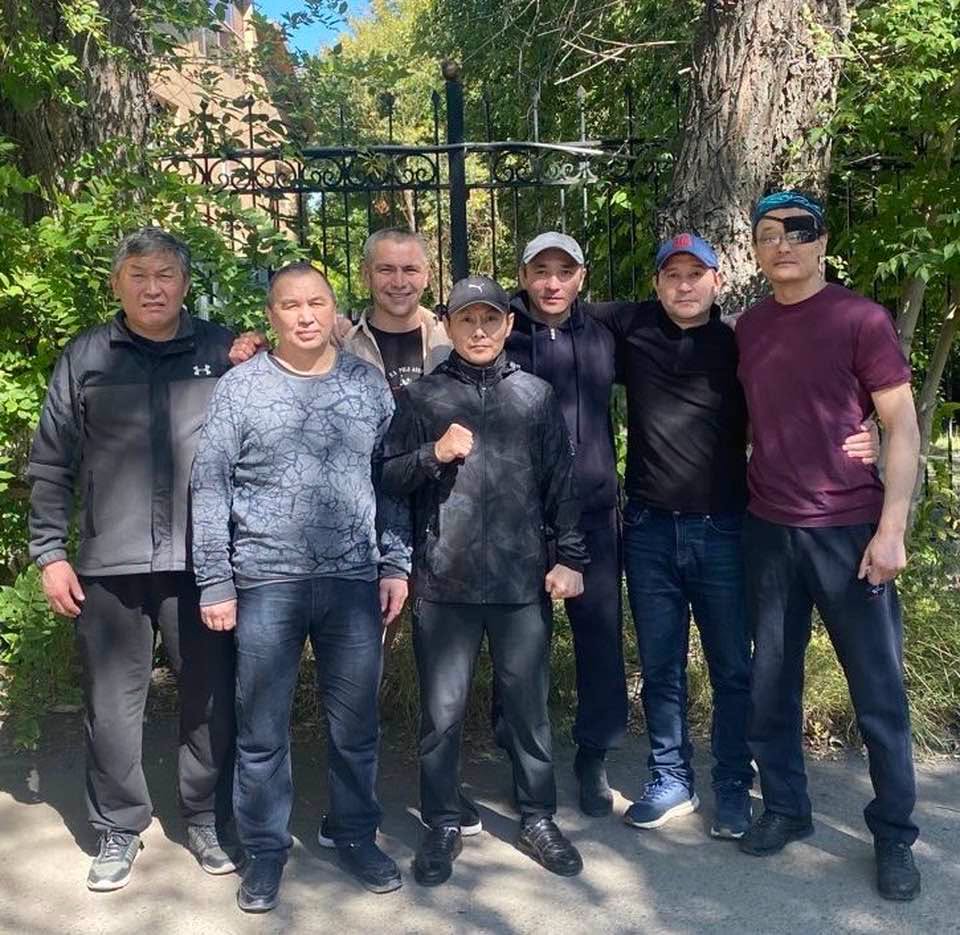
PHOTO: Abzal Dostiyar
The second case, built on comparable accusations, ended very differently. On Tuesday, a judge at the Almalinsky District Criminal Court, in Almaty, pronounced five activists guilty of attempting to seize the Presidential residence, known as “the Akorda”. According to human rights activist Bakhytzhan Toregozhina, two activists, Kaisar Uzbek and Talgat Ashirov, were sentenced to a total of 5.5 years in prison, while the three others defendants were sentenced to 5 years in prison.
Defendants Askar Nurmagan, Tagay Abduali and Duisenbek Zhashashev were charged with advocating for the violent seizure or retention of power by a group of individuals, as well as with preparing and organizing mass riots involving violence, destruction, and resistance to the authorities. In addition to these charges, Kaisar Uzbek and Talgat Ashirov were also accused of the illegal acquisition, possession, and transportation of explosives by a group of individuals.
At the start of the trial, the prosecutor requested that the hearings be held behind closed doors, citing the fact that one of the witnesses feared for his safety. The court granted the request, making the trial a closed session. This decision was commented on by one of the activists’lawyers, Zhanara Balgabeyeva, who stated: “They don’t want transparency. They want to quickly lock everyone up without any fuss”.
According to the indictment, in order to plan their further actions and carry out preparatory measures, the activists held secret meetings and created a group chat on WhatsApp called “Kairat Team.” “Kairat” here can refer to an Almaty-based football club, or the word “strength”.
The indictment states that “as a result of meetings and communications within the group, the individuals, acting in concert, agreed on the need to organize mass unrest in the city of Astana to seize power, take over the residence of the President of Kazakhstan -Akorda- and incite a spontaneous uprising among the population” .
The indictment also describes the defendants’ actions from January through June 2025, including their meetings and communications.
Last week, the prosecutor sought eight years in prison for each of the activists, to be served in a medium-security facility.

PHOTO: Ulysmedia.kz
Similar trials have occurred in recent years, also yielding different outcomes. In 2024, defendants received sentences ranging from 1 year and 9 months to 4 years for attacking the president’s residence and the Almaty city administration. In another case, known as the “Tractor case,” related to an attempted coup d’Etat, sentences ranged from 5 to 6 years.
Those documented cases are fueling concern among human rights groups, such as Human Rights Watch, which had previously accused Kazakh authorities of using the justice system to intimidate and silence government critics.