The appeal trial of activists from the ‘Atazhurt’ initiative—which campaigns against the repression of Muslim minorities in China’s Xinjiang region—is set to begin in the Almaty region. A week earlier, the police detained the activists and relatives of those convicted to prevent them from meeting with US diplomats.
On their way to Astana, May 25, to meet U.S. Embassy representatives and submit complaints over the April 2026 convictions of activists, several relatives of activists say they were pulled off trains, stopped on highways, and taken in for questioning, never reaching their destination.
An appellate court hearing opens tomorrow, June 9th, in Qonaev, for those individuals who were detained while attempting to reach Astana. They had planned to raise concerns about the convictions of 19 Atajurt activists and supporters who were sentenced in April 2026 after participating in a protest criticizing China’s inhumane policies in Xinjiang and calling for the release of ethnic Kazakhs detained there. Human rights organizations, including Amnesty International, Human Rights Watch, the International Partnership for Human Rights (IPHR), and KIBHR, have criticized the prosecution and called for the convictions to be overturned.
The UN Special Rapporteur on Human Rights Defenders, Mary Lawlor, has also called for a review of the activists’ convictions and for guarantees of a fair judicial process.
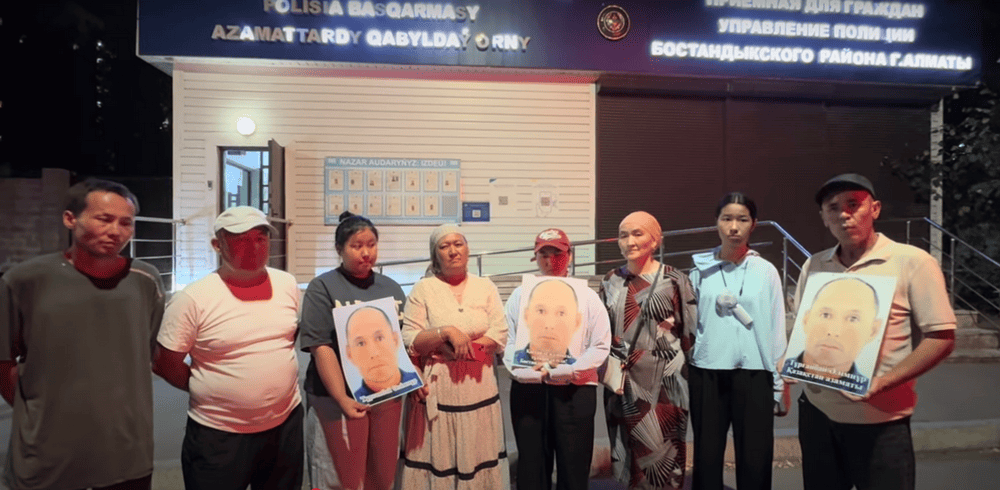
Last week, a press conference was held here at the Kazakhstan International Bureau of Human Rights and Rule of Law (KIBHR), where family members of the convicted activists described being removed from trains, stopped on highways, and subjected to questioning by law enforcement officials.
Among those affected was Nurgul Ibrayeva, the wife of imprisoned Atajurt leader Bezkat Maksutkhan. Ibrayeva said she planned to travel to Astana to meet with embassy representatives and submit appeals to the Prosecutor General’s office and the Presidential Administration regarding her husband’s conviction. Anticipating possible interference, she purchased her train ticket shortly before departure rather than online.
According to Ibrayeva, police officers approached her shortly after she boarded the train and ordered her to disembark. She was subsequently taken to a police station, where she says she was questioned for several hours about her planned trip and the purpose of her meeting. Read more here about her experience.
Atajurt supporter Asen Nursan and Oralkhan Aben, the wife of imprisoned activist Tursynbek Kabi, reported similar experiences. The pair said they were detained while traveling by car toward Astana. Nursan said that three unidentified men took them to a police station, where they were threatened and warned against speaking publicly about the case. “I want to state that they could kill me at any moment, and say I committed suicide. I declare publicly that I would never do such a thing,” he said.
Aben stated that she later lost her job following the incident and believes her phone was compromised. Other relatives and supporters also reported being stopped by police, searched, and informed that they would not be allowed to continue their journey to the capital.
For the families of those imprisoned, the recent detentions have deepened concerns that pressure surrounding the Atajurt case extends beyond the convicted activists themselves. Speaking at the press conference, several relatives questioned why they were prevented from meeting diplomats or submitting complaints through legal channels, arguing that they were simply seeking justice for their family members.
The authorities have not publicly provided a detailed explanation for the reported detentions.
Read more here about the 19 Atajurt activists who were detained.