What began as a defamation case over critical reporting has evolved into a sprawling criminal trial that now sees the editor-in-chief of independent news agency KazTAG behind bars, and its director accused of failing to censor him and charged with hooliganism in an incident where he was the victim.
On June 15, the Almalinsky District Court in Almaty opened proceedings against four defendants connected to the independent news agency KazTAG. The case stems from publications alleging fraudulent schemes involving Freedom Finance, a company within Freedom Holding Corp., controlled by Russian businessman Timur Turlov. Following complaints from the company, authorities charged KazTAG editor-in-chief Amir Kasenov and commentator Zhanna Kaparova with disseminating knowingly false information under Article 274 of Kazakhstan’s Criminal Code.
Article 274 has long been criticized by domestic and international press freedom organizations because it is so broadly worded that it can be used to criminalize reporting errors, disputed claims, or information that powerful individuals or institutions simply dislike. The Kazakhstan Union of Journalists has previously called for Article 274 to be removed from the criminal sphere entirely and replaced with civil remedies for reputational disputes.
Kasenov was detained in Astana just before the New Year and spent nearly six months under house arrest.
Shortly after proceedings began on June 15, the court granted a prosecutor’s request to replace Kasenov’s house arrest with pretrial detention, citing repeated violations of his restrictions. The alleged violations reportedly included a June 2 video address on social media to President Kassym-Jomart Tokayev and conversations with journalists covering the trial. Immediately after the ruling, guards escorted Kasenov from the courtroom and transferred him to a detention facility.
The case against KazTAG director Aset Matayev has taken an unusual path of its own. Earlier this year, prosecutors dropped a separate Article 274 case against him. But authorities later brought new charges under Article 254, alleging improper performance of managerial duties. In essence, prosecutors argue that Matayev, as head of the agency, failed to prevent Kasenov from publishing the disputed material about Freedom Finance.
Matayev also now faces hooliganism charges connected to a March altercation outside Almaty’s Dostyk Plaza shopping center. Police claim Matayev and his acquaintance, Ramazan Ramazanov, were intoxicated and provoked a fight. The defense counters that Matayev was actually the victim, suffering serious injuries including a fractured frontal bone and an open head wound. Nevertheless, both Matayev and Ramazanov remain defendants in the hooliganism case.
Defense lawyers have criticized the delay of the trial and the decision to combine the Freedom Finance-related charges with the separate hooliganism case, arguing that the proceedings have been artificially consolidated and should instead be heard in Astana, where much of the underlying activity occurred and where Kaparova resides.
The case also revives memories of an earlier prosecution of the Matayev family. In 2016, Aset Matayev and his father, journalist and Kazakhstan Union of Journalists chairman Seitkazy Matayev, were convicted on embezzlement charges and sentenced to prison. The Supreme Court overturned those convictions in 2022, closing the case for lack of evidence. In a rare move, the presiding judge apologized to the acquitted journalists on behalf of the state.
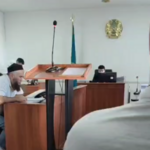
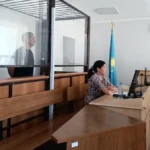
No indictment was read during the hearing on June 15. Instead, the session focused on procedural motions and challenges raised by the defense, most of which were denied. There were numerous technical problems that hampered public observation of the proceedings, including poor-quality video transmissions. The judge acknowledged the issues and complaints from the lawyers, but said no alternative arrangements were available.