A Kazakhstani man who openly opposed Russia’s war in Ukraine says he was beaten and tortured with electric shocks by FSB officers to force a false espionage confession, according to a handwritten letter sent to UN treaty bodies.
Roman Belov, a Kazakhstani citizen, was arrested by Russia’s FSB on 18 November after being lured across the border from Baikonur, a Kazakhstani town leased to Russia for its spaceport. He has since been held on espionage charges. In his statement, dated 25 August, he describes the circumstances of his detention and the repeated use of physical force against him, the beatings, torture by electric current, and the degradation of his human dignity, with the aim of obtaining a false self-incrimination and testimony against himself.
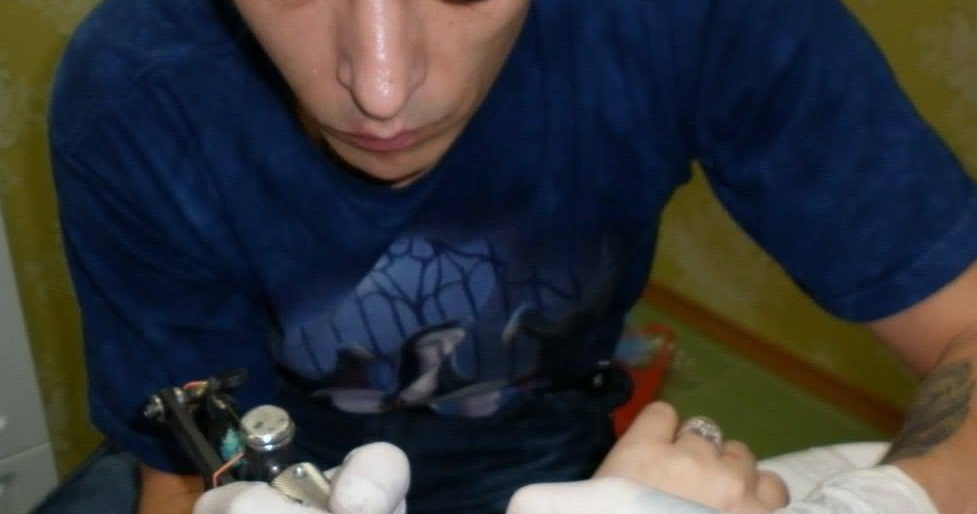
Belov, who worked in a tattoo parlour in Baikonur, had openly opposed Russia’s war in Ukraine, which had previously brought him into conflict with another resident who fought on the Russian side. Presumably under the false pretext of a job offer to paint a fitness centre, he was lured into Russia, where he was detained almost immediately.
“Immediately after a Russian border officer handed back my passport, a bag was pulled over my head from behind. I was thrown to the asphalt head first, and people began hitting me with their fists and feet on the head and body. My hands were handcuffed behind my back. I shouted that it was a mistake and asked them to let me go. I was told roughly to shut up, or it would get worse,” he writes.
“I am certain that my travelling companions saw everything before I was put in the car,” he adds, which suggests he was deliberately trapped.
According to the statement, Belov was taken to a room, where FSB agents told him that a case had been opened against him that same day on suspicion of espionage. He was then beaten to make him confess to spying for Ukraine:
“I denied the accusation and kept saying I had not done it. I was beaten on the head. They began threatening that I would get a life sentence and sit ‘among the inmates at the bottom of the hierarchy’ (…), and they insulted and humiliated me. They said that if I did not confess, my wife would be put in prison, and that at the very least my children would be sent to an orphanage and I would never see them again. (…) I kept denying what I was accused of.
Then someone behind me began applying electric shocks through the handcuffs, while another man pulled my arms upward. It was very painful and frightening, and I screamed. They stopped and asked: ‘Do you confess? Did you send it?’ (…) This time it seemed to me that the current and the duration had been increased. I felt as if my right eye were bursting out (…), though no marks were left. They shouted: ‘Confess, did you send it?’ I felt myself losing consciousness and shouted that I confessed, that I had sent it. Only then did it all stop.”
The torture continued until he signed documents, gave further details of his alleged “espionage” and confessed to his crimes on camera.
Belov also reports something deeply alarming: he overheard FSB officers saying that his apartment, located on Kazakh territory, was being searched at that very moment by Russian forces, in front of his children. “One of them named my wife and her workplace and told me that she would no longer work there and would go to prison for a long time. I feared for my loved ones. In reality, I am still not at peace about them today.“
That same night, he was brought to the investigator’s office and given an appointed lawyer. There, he was told that the best course was to confess. “None of my rights were read to me,” he adds. He told those present that he had been tortured, but nobody reacted.
On his way to the detention centre, after signing the documents, he was threatened into silence:
“(…) an FSB officer, one of those who had arrested me, came in, took me into another office, introduced himself as Nikita, and said he would not touch me, so that I would not think of playing games anymore or of trying to tell the lawyer how I had been electrocuted, because nothing good would come of it for me. He said that if I did everything the investigator said, I could count on a minimum sentence and could see my relatives, and that nothing would happen to them. He let me understand that he knew where my older children from my first marriage were (…) He also said that my fate was now in the investigator’s hands, that he had his own people there, and that things could be made very hard for me in prison, that there are devices whose use often leads to death. (…) All of this was said calmly, but with a threat.”
Under this pressure, Belov decided to hide the torture from the medical staff at the detention facility, saying he had fallen to explain his bruises and abrasions.
In nine months of detention, his complaints and requests have gone unanswered:
“All my petitions, appeals, and complaints are ignored. I wrote to the head of the FSB investigation department in Orenburg and received no reply. Several times I tried to dismiss the appointed lawyer, E.S. Khamitova, but the investigator opposes it. Likewise, the investigator forbids the Kazakh consul from meeting me. (…) In all this time there has been no private meeting with a defense lawyer, which the law provides for. I have received no legal assistance or defense from the appointed lawyer E.S. Khamitova, ” he reports on the statement.
Belov had medical problems before his arrest, and his health has worsened in detention. He reports headaches and pain in the kidney and pelvic area, for which he was given painkillers and a single ultrasound. He has not seen a urologist.
He ends his letter with this appeal:
“Now, as I write all this, I still have hope of returning home to my family and hugging my children. But in reality, seeing how indifferent everyone is, I no longer believe in anything or anyone. (…) I do not know whether my family is in danger, given the threats made against them. I do not know what awaits me next. But I want the civilized world to know, through my example, how pre-trial investigation and justice in general are carried out in the 21st century in a modern country. I ask for justice and safety for myself and my family. We are not in the Middle Ages and I am not a heretic. I do not deserve this fate because of my peaceful views, opinions, and wishes. Wishing for peace in the world is not a crime.”
Belov’s case comes as Russia’s reach into Kazakhstan appears to be growing. Since the start of 2026, Kazakhstan has grown markedly more willing to hand Russian citizens back to Moscow. It extradited IT specialist Alexander Kachkurkin in February and approved the extradition of two activists, Mansur Movlaev and Yulia Yemelyanova. Analysts say more handovers are being prepared.
Baikonur illustrates this influence. In Priozersk, another city leased to Russia, a Russian officer was taken, charged with desertion and transferred to Russia, where he was sentenced to six years in prison. In these leased towns, where Russian authorities operate on Kazakh soil, the border is easy to exploit.