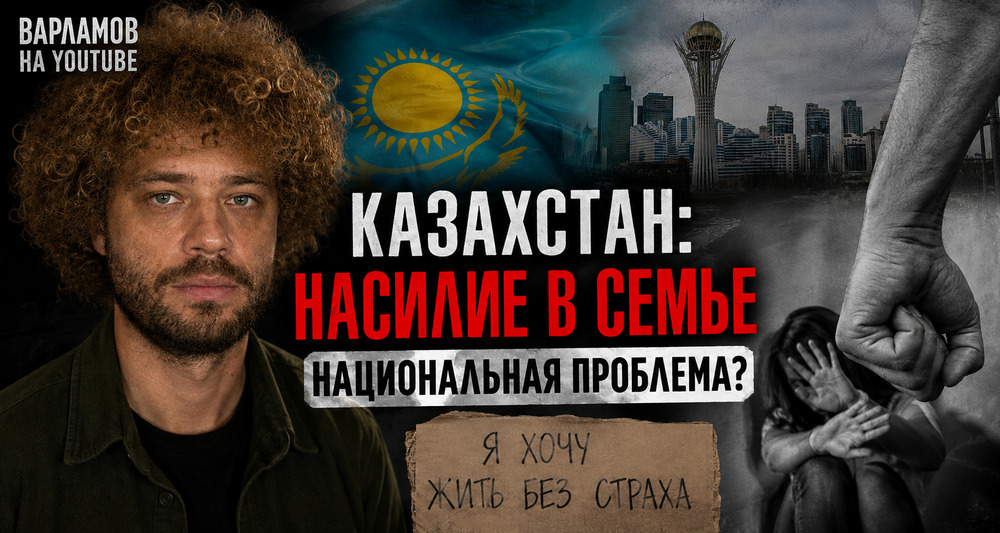
“Thank you for not staying silent.” This is one of the many comments left under Russian journalist Ilya Varlamov’s latest YouTube documentary, Kazakhstan: Family Abuse – A National Problem?
In the documentary, Varlamov examines the widespread issue of domestic violence in Kazakhstan. In its final section, he focuses on women’s rights, the abuses many women face, and their representation in Kazakh society, giving a platform to women to share their experiences and opinions.
Ilya Varlamov is a Russian journalist, blogger and founder of the Attention Foundation, and a YouTuber with more than five million subscribers. He is now located in Canada, after leaving his home country because of the persecution he faced there. Indeed, he is opposed to the war conducted by Russia in Ukraine
For this investigation, he collaborated with several experts, including lawyer Zhanna Urazbakhova and prominent Kazakh women’s rights activist Dinara Smailova, founder of the NeMolchiKZ (“Don’t Silence Her”) Foundation. Smailova was forced to leave Kazakhstan after facing what she describes as years of state persecution. Throughout the documentary, Varlamov highlights the urgent need for independent women’s rights organisations, such as NeMolchiKZ, to operate freely. Together, they discuss the widespread failures in law enforcement and the authorities’ inability—or unwillingness—to protect victims of domestic violence, leaving countless women at risk.
However, giving Kazakh women a platform to denounce corruption, institutional failures, and the lack of protection for victims did not sit well with everyone. Several women interviewed argue that speaking publicly is essential because it helps “open people’s eyes” to the reality of domestic violence in the country.
The video’s comment section quickly became divided. While many viewers thanked Varlamov for drawing international attention to the issue, others criticised him for focusing exclusively on Kazakhstan. They argued that similar problems exist in Russia, his own country, and accused him of damaging Kazakhstan’s international image.
In response, Varlamov noted that he has extensively covered domestic violence in Russia and explained that this documentary seeks to examine Kazakhstan specifically, describing it as “the epicentre of domestic violence in Central Asia.” One woman featured in the documentary goes even further, stating: “Kazakhstan is not just the epicentre of domestic violence. It is the epicentre of the systemic cover-up of crimes.” According to the investigation, the problem extends beyond domestic abuse itself to the repeated failure of police and state institutions to investigate complaints or protect victims.
One of the most emblematic cases is that of Saltanat Nukenova. Before she was murdered by her husband on 9 November 2023, she reportedly contacted the police on eight separate occasions seeking protection. Although her husband had previously been detained briefly, no criminal case was opened against him. Her murder shocked Kazakhstan and prompted widespread public outrage.
The case led to the adoption of the so-called “Saltanat Law“, signed by President Kassym-Jomart Tokayev on 15 April 2024. The legislation strengthened criminal penalties for domestic violence and re-criminalised certain forms of abuse. Before these reforms, many incidents of domestic violence fell under Article 73 of the Administrative Code, where first-time offences could result in a maximum of only five days’ administrative detention.
Yet activists argue that stronger legislation alone is insufficient without consistent enforcement.
The documentary presents several examples illustrating this concern. Among them is the story of Anar, whose daughter was allegedly assaulted. According to her testimony, she was offered 12 million tenge to withdraw her complaint and remain silent. When she refused, she says she was labelled “a disgrace to the family.“
Despite the legislative reforms introduced after Saltanat Nukenova’s murder, domestic violence remains widespread. According to figures cited in the documentary, reports of domestic violence have continued to rise, while approximately 55% of cases are still closed without sanctions.
By giving visibility to survivors, activists, and organisations working on the ground, Varlamov’s documentary has brought renewed international attention to the issue of violence against women in Kazakhstan. It also reinforces a growing call from civil society: meaningful change will require not only stronger laws but also their effective and impartial implementation. Ultimately, the documentary serves as an urgent appeal for the authorities to ensure that legal protections translate into real protection for women.
Illustration generated with AI