The International Federation for Human Rights (FIDH), Truth Hounds, and the Kazakhstan International Bureau for Human Rights and Rule of Law (KIBHR) are publishing today a first in-depth global study and analysis of Russia’s large-scale predatory recruitment of foreign fighters in its war against Ukraine.
Based on nine months of research and interviews with prisoners of war, the report determines that Russia has organised and overseen a global system of trafficking in persons — a transnational crime.
It also sets out concrete recommendations addressed to concerned states and international organisations.
Paris, Kyiv, 29 April 2026. Since the start of the full-scale invasion of Ukraine in February 2022, Russia has recruited at least 27,000 foreign nationals from more than 130 countries to participate in its war of aggression against Ukraine — a fast-rising figure that reflects a deliberate and institutionalized strategy, far beyond the mere use of volunteers.
The report, entitled “Combatants, Mercenaries or Victims of Human Trafficking? Russia’s Exploitation of Foreign Fighters in Its War Against Ukraine”, is the result of a joint research conducted by FIDH, Truth Hounds, and the Kazakhstan International Bureau for Human Rights and Rule of Law (KIBHR), with support from partners in South Korea and consultations with regional experts in Nepal, Cuba, and Kenya. It is based on interviews with sixteen prisoners of war (POWs) held in Ukraine, and former Russian military, as well as open-source research and consultations with Ukrainian authorities and human rights experts.
“This report highlights something fundamental: that the use of foreign fighters by Russia is neither a marginal nor a spontaneous phenomenon. Russia has built a global recruitment system that deliberately targets the most vulnerable populations — undocumented migrants, detainees, precarious workers, or even foreign students — across dozens of countries in Asia, Africa, and Latin America. Many of these men knew in some capacity what they were signing up for. But some were also deceived or coerced. But in all cases, it is a State that has instrumentalised them as part of its war machine and sent them to the most dangerous positions on the frontline,” said Alexis Deswaef, President of FIDH, before adding “In February of this year, I visited Truth Hounds in their offices in Kyiv, and I saw first-hand how they conducted their essential work on this issue, achieved in extremely difficult conditions.”
A massive illegal system, from recruitment to the front line
The report documents how Russia’s recruitment of foreign fighters has evolved into a global operation targeting individuals in situations of economic, social or legal vulnerability. In Russia, labour migrants, many of them from Central Asian states like Kazakhstan, have been offered military contracts as an alternative to detention or deportation. In sub-Saharan Africa, Nepal, Cuba, and Yemen, individuals have been approached by intermediaries promising well-paid civilian jobs — in construction, security, or cleaning — and Russian citizenship only to find themselves, days after arriving in Russia, in uniform and sent to the front. Up to 20% of these fighters do not survive the first four months of deployment and some report ill-treatment and humiliation by fellow soldiers or commanders, pointing to exploitation and abuse.
“Despite the fact that many states are taking measures to curb recruitment, and although Russia claims it is no longer recruiting citizens from certain countries, the predatory recruitment continues. Ukrainian authorities predict that in 2026 Russia will engage more 18,500 foreign nationals, marking the highest annual figure since 2022”, says Maria Tomak, associated researcher and advocacy expert of Truth Hounds. “This underscores the continued relevance of our report. Our primary objective remains clear: to halt recruitment and to compel Russia to repatriate those already recruited. We are grateful to our partners at FIDH for their attention to this issue. We also extend our sincere appreciation to our local partners for their expert support in navigating specific regional contexts. This is a vital collective effort that must be further advanced to ensure that Russia can no longer cynically exploit citizens of other countries in its war of aggression against Ukraine.”
The recruitment process, motivation and treatment during deployment lead to a difficult appraisal of the legal status of the fighters. A significant share of the recruits knew they were joining an armed conflict, motivated by promises of citizenship and salaries far exceeding those available in their home countries. Of those fighters, many will face criminal prosecution for mercenarism or participation in a foreign armed conflict in their home countries.
Others, deceived into joining Russia’s Armed Forces, might have become victims of human trafficking, warranting the consideration of overlapping legal regimes of international humanitarian law, transnational criminal law and international human rights law. The report finds that this situation has triggered the obligations of states to ensure the repatriation of their nationals sooner than the end of the active phase of the war and to prosecute recruiters who have facilitated the deceit or coercion resulting in their transfer to Russia, and eventually to Ukraine. Obligations that few states uphold.
A state system at the boundaries of human trafficking
Beyond individual cases, the report highlights an institutional architecture: legislative framework expanding foreigners’ eligibility for military service in Russia’s Armed Forces “under contract” and for expedited pathways to citizenship; enlistment bonuses to recruiters and fighters; documented involvement of the FSB, diplomatic missions, and “Russian Houses” in overseas recruitment; including the unscrupulous issuance of tourist visas. The report concludes that in some cases, Russia’s predatory recruitment meets the constitutive criteria of human trafficking as defined by the Protocol to Prevent, Suppress and Punish Trafficking in Persons, Especially Women and Children (the Palermo Protocol) — act, means, and purpose — thereby engaging Russia’s responsibility under international law.
The report also examines the responsibility of selected countries of origin under the Palermo Protocol and conventions prohibiting mercenarism. While Kazakhstan, Nepal and especially Kenya have initiated judicial or diplomatic responses, none has fully met its obligations under the Palermo Protocol. Cuba has an appropriate legal framework, but its implementation remains opaque.
The report puts forward detailed recommendations addressed to countries of origin, international organizations — UN, EU, OSCE, ICRC — as well as Ukraine and Russia. It notably calls for a revision of the international definition of mercenarism, stronger anti-trafficking legislation to cover recruitment into armed conflicts, and the establishment of repatriation mechanisms for victims of predatory recruitment held as prisoners of war.
The Repor in English language is available HERE.
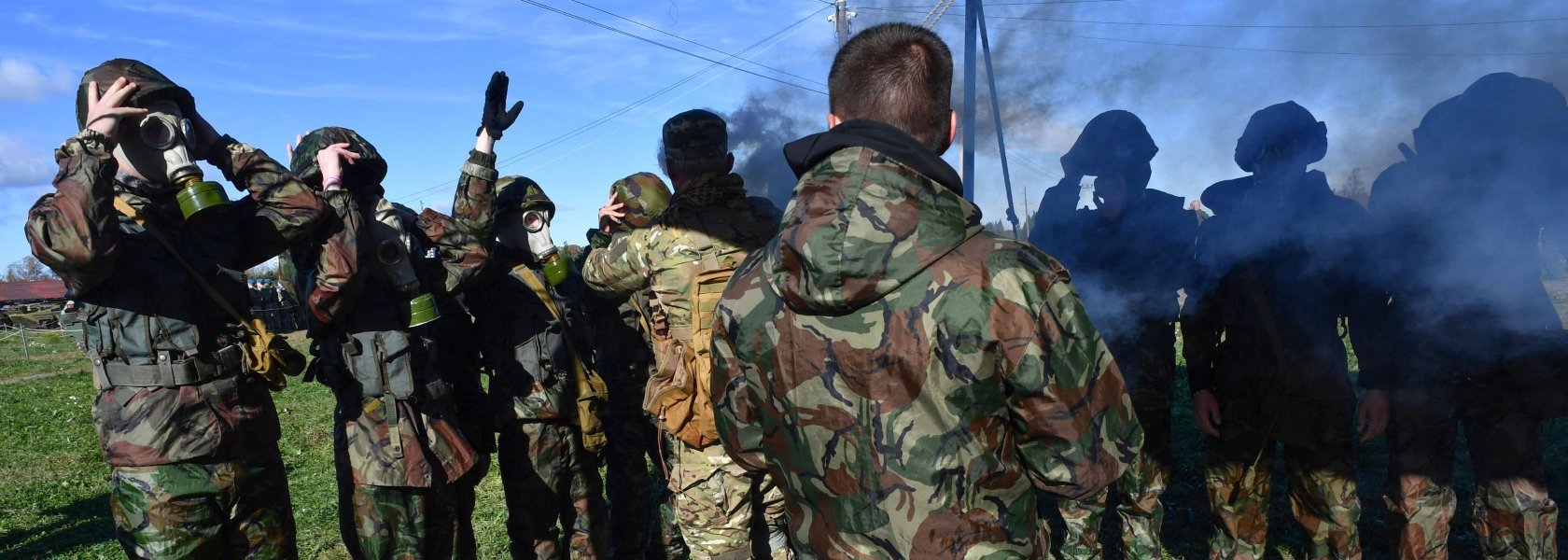
PHOTO: Olga MALTSEVA / AFP