International Partnership for Human Rights (IPHR) and Kazakhstan International Bureau for Human Rights and Rule of Law (KIBHR) are seriously concerned that a criminal case brought in Kazakhstan against activists protesting China’s repression of ethnic minorities is inconsistent with international human rights standards protecting freedom of expression, peaceful assembly, and association. The two organisations call for the dismissal of the charges and the release of activists.
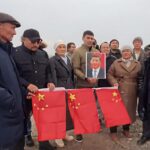
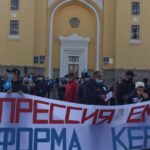
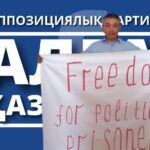
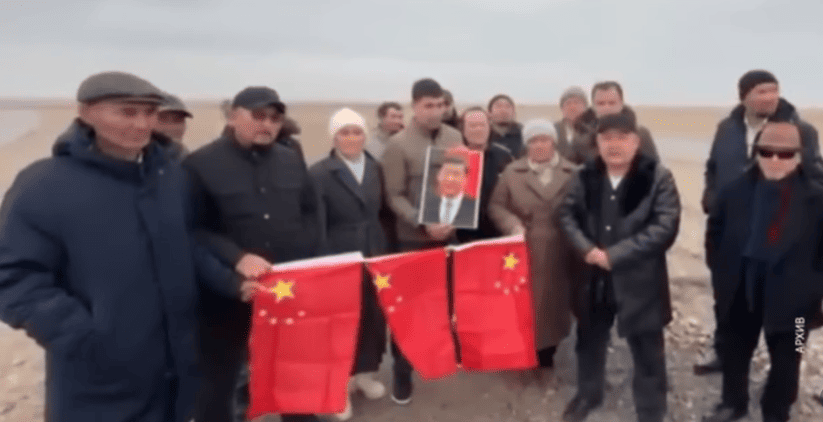
On 13 November 2025, police detained 19 activists affiliated with the Atajurt movement when they staged a peaceful protest near the Kazakhstan–China border in Almaty region. The protestors aimed to draw attention to the persecution of ethnic Kazakhs in China and demand the release of Alimnur Turganbai, an ethnic Kazakh who left China’s Xinjiang region for Kazakhstan in 2017, but who was detained in July 2025 while travelling to China for work. His whereabouts and legal status in China remain unknown. In addition, the activists sought to voice concern over China’s growing political and economic influence in Kazakhstan.
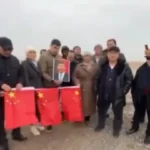
During the protest, activists burned three small Chinese flags and a portrait of Chinese President Xi Jinping, and stomped on them. Video recordings of the protest were shared through social media.
After being apprehended by police, 12 protesters were sentenced to between seven and 15 days of administrative detention, while others were fined under Article 434 of the Code of Administrative Offences (“petty hooliganism”). The following week, the authorities also initiated more serious charges against the activists under Article 174(2) of the Criminal Code, which criminalises “incitement” to ethnic, national, or other discord when committed by a group of people. This provision carries penalties of up to ten years’ imprisonment.
Thirteen activists were remanded in custody for 10 days, including Bekzat Maxutkhan, Baqytnur Nurmuqan, Batylbek Baigazy, Bedelkhan Qabileshim, Marghulan Nurdangazy, Beisenali Aqzhigit, Nurgeldi Nursapa, Erkinbek Nuraqyn, Ergali Nurlybayev, Erbol Nurlybayev, Tursynbek Qabi, Qanat Turdybai and Quandyk Qozhanov. Six others – Nazigul Maksutkhan, Gulnar Shaimurat, Guldariya Sherizat (Turganbai’s wife), Baqytzhan Shugyl, Asylkhan Kolkhaev and Ayan Kalymbet – were placed under house arrest. In late November 2025, the detentions and house arrests of the activists were extended by two months.
There are heightened concerns about the impact of these restrictions and the psychological stress affecting the targeted activists on the health and well-being of one of them – Nazigul Maksutkhan –who is heavily pregnant.
Prior to the opening of the criminal proceedings, China’s Consulate General in Almaty sent a diplomatic note to Kazakhstan’s Ministry of Foreign Affairs (a copy of which has been seen by the organisations issuing this statement), raising concerns about the video of the protest shared on social media and requesting “appropriate measures” to investigate and address the incident. The indictment against the activists refers directly to this note.
The investigation has now been completed, and the case has been referred to court. The first hearing is scheduled to take place in the city of Taldykorgan on 21 January 2026.
The criminal case forms part of a broader pattern of pressure against the Atajurt movement, which for years has sought to expose the persecution of ethnic Kazakhs and other Turkic minorities amid China’s crackdown in Xinjiang — an issue that remains politically sensitive given Kazakhstan’s close and deepening ties with China. Authorities have denied Atajurt registration as a political party on ostensibly technical grounds and have repeatedly detained and fined its members for participating in peaceful protests or for involvement in the activities of an unregistered organisation. In 2019, the movement’s founder, Serikzhan Bilash, was himself prosecuted under Article 174 of the Criminal Code and subsequently fled the country.
Kazakhstani authorities appear to have been reluctant to engage actively on Turganbai’s case, despite his Kazakh citizenship. In August 2025, following repeated appeals by his family, the Ministry of Foreign Affairs stated that Chinese authorities had informed it that Turganbai was still considered a Chinese citizen, as he allegedly had not received permission to renounce his citizenship, and that China does not recognise dual nationality. However, according to his relatives, Turganbai formally renounced his Chinese citizenship after acquiring Kazakh citizenship in 2017 and received official confirmation of this step. The legal grounds for Turganbai’s detention by the Chinese authorities remain unclear, as do the concrete steps, if any, taken by the Kazakhstani government to secure his protection.
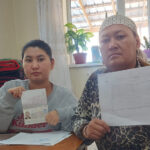
At the same time, Turganbai’s relatives have been subjected to intimidation and harassment when raising his case. In particular, his wife and daughter were repeatedly detained, fined and warned by police for allegedly violating assembly regulations when organising public actions in summer 2025 to draw attention to his case and seek support from the authorities.
The provision invoked — Article 174 of the Criminal Code — against the Atajurt activists is broadly worded and has repeatedly been used to silence critical voices. International human rights experts, including the UN Human Rights Committee, have criticised its vague nature and its application in ways that unduly restrict freedom of expression, assembly and association. In an opinion issued in 2020, the UN Working Group on Arbitrary Detention found that the authorities unlawfully targeted Atajurt founder Serikzhan Bilash for exercising his fundamental freedoms when arresting him on similar charges.
State-appointed experts cited by the prosecution concluded that the actions of the protesters contained elements of incitement to national discord against the Chinese people, as well as insults to the national dignity and honour of Chinese citizens. They also argued that the protesters’ actions displayed disrespect toward state symbols.
However, rather than advocating hatred towards Chinese people, the protesters criticised the policies and actions of the Chinese authorities against ethnic minorities – including in Turganbai’s case – and expressed opposition to China’s mounting political and economic power in Kazakhstan. While they shouted slogans such as “Down with China!”, “Down with the Communist Party!”, and “Down with Xi Jinping!” in this context, the protest remained peaceful and did not include any calls for violence, hostility, or discrimination. Moreover, it took place against the background of prolonged uncertainty about the fate of a detained family member and co-activist, as well as the protesters’ indignation at the Chinese government’s repressive campaign in Xinjiang, under which many of their relatives have been detained in so-called ‘’re-education camps’’ and subjected to serious hardship.
Accordingly, the protest did not constitute prohibited incitement to national hatred under international human rights standards, which permit the criminalisation of expression on such grounds only in narrowly defined circumstances, where there is a clear intent to incite the audience against a national group and the speech is likely to cause imminent harm.
While the desecration of foreign flags or state symbols may be regarded as offensive and is criminalised in some domestic legal systems, it constitutes a form of expressive conduct when carried out as part of a peaceful protest, as in this case.
As emphasised by the UN Human Rights Committee, international human rights law does not permit restrictions on expression merely because it is offensive or insulting. Any restriction must pursue a legitimate aim, such as preventing a real and imminent security threat or a serious public disorder and must meet strict requirements of necessity and proportionality. According to the jurisprudence of the European Court of Human Rights, burning flags and portraits of state leaders can be considered a form of protected political expression when undertaken during peaceful protests. The Venice Commission and the OSCE Office for Democratic Institutions and Human Rights have underlined that civil disobedience acts aimed at amplifying a message may form part of a protest and that any possible penalties must be strictly proportionate.
In the light of the above, the criminal case against the Atajurt activists is incompatible with Kazakhstan’s international human rights obligations. The imposition of criminal sanctions — in particular imprisonment — for non-violent protest actions of this kind cannot be justified. The Kazakhstani authorities should:
— Drop the charges initiated against Atajurt activists under Criminal Code Article 174(2) and immediately release them
– Safeguard the health and well-being of the activists who have been prosecuted, especially that of Nazigul Maksutkhan and her unborn child.
– End the harassment of Atajurt activists and Turganbai’s relatives and ensure that they can pursue their civic activities without intimidation or retaliation.
– Engage constructively with civil society actors seeking to protect the rights of their compatriots, rather than suppressing such initiatives.
– Bring Criminal Code Article 174 in line with international human rights standards, as repeatedly called for by international human rights experts, and ensure that it is not used to target the peaceful expression of views that may be politically sensitive or inconvenient but do not amount to advocacy of discrimination, hostility, or violence.