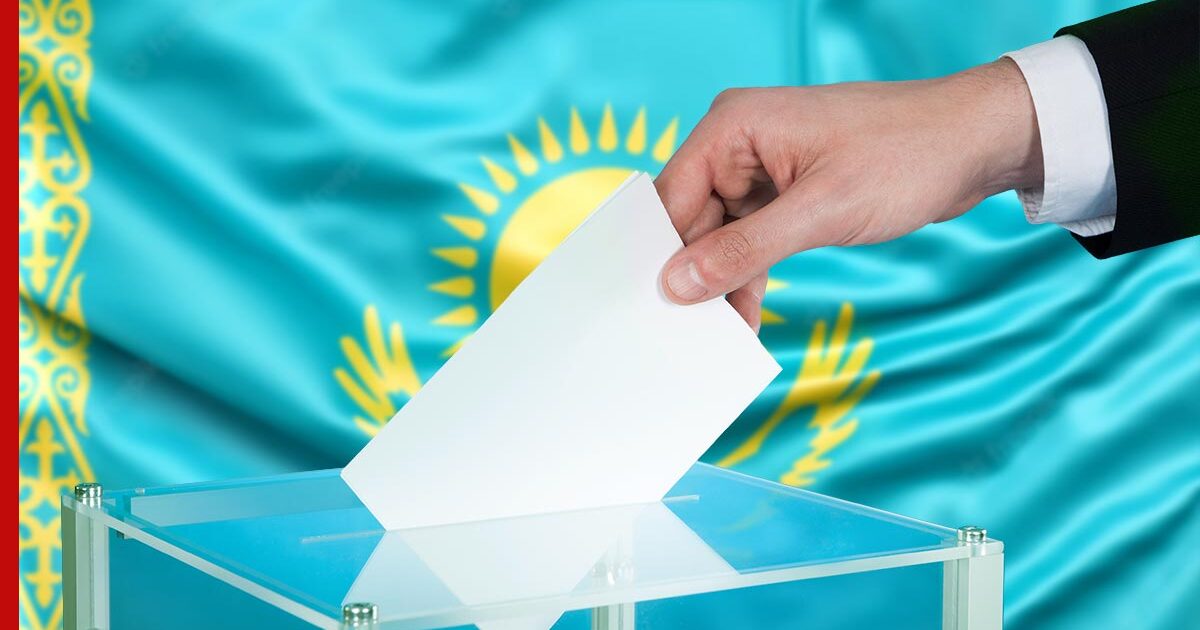
The Needs Assessment Mission of the ODIHR OSCE presented its initial findings on the upcoming referendum on Kazakhstan’s new constitution.
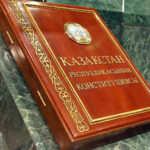
On February 11, 2026, the President of Kazakhstan, Mr. Tokayev, invited his fellow citizens to vote on the adoption of a new constitution scheduled for March 15. While the question posed is clear, the drafting of the document, the campaign, and the consequences of such an adoption remain blurred, to say the least.
What was announced in September 2025 as a parliamentary reform aimed at “modernizing” the Kazakh political system in the era of artificial intelligence has since transformed into a change of more than 80% of the current constitution, adopted in 1995 and amended in 2022. The ODIHR NAM report highlights a lack of transparency and inclusion in the drafting of the new constitution. Indeed, while the draft text of the new Constitution was prepared by the Constitutional Commission comprising civil and public servants, local executives, members of selected civil society organizations, members of the parliament, and the judiciary, as well as representatives of state and private enterprises, many civil society voices have stated they were given no seat at the table.
The conduct of the campaign has also been largely problematic, as it has been primarily led by the government. The Constitutional Referendum Commission informed the ODIHR NAM “that it is neither responsible for nor conducting a voter education program on the substance of the draft Constitution to be voted at the referendum,” and that it was actually up to the pro-referendum government coalition to carry out such a campaign. Furthermore, the legislation does not ensure equal access to resources between proponents and opponents: there are no regulations on campaign financing; television, which remains the primary medium used, is either state-owned or largely state-subsidized; and the Internet, which remains the main space for dissenting voices, is increasingly suppressed by stricter regulation and control (blocking websites, requests to remove content, and administrative cases against journalists and activists for the alleged dissemination of false information). Consequently, there are no means for dissenting voices to be heard, as they are effectively repressed; ultimately, self-censorship has become the most common mode of expression.
Regarding the vote itself, once again, nothing has been done to facilitate inclusion. First, contrary to international standards and previous ODIHR recommendations, the law continues to disenfranchise citizens declared incapacitated by a court based on intellectual or psychosocial disabilities, as well as criminals, irrespective of the gravity of their crime. Additionally, the requirement for referendum ballot papers in minority languages is no longer necessary following recent amendments to the Referendum Law, which also restricted referendum observation to accredited organizations.
Finally, the one-month delay between the publication of the draft constitution and the date of the vote does not allow for an enlightened and informed vote by the electors. This very short timeframe also prevents the deployment of a full ODIHR Referendum Observation Mission (ROM), which will have to settle for a more limited Referendum Assessment Mission (RAM).
Beyond a process that remains largely dominated by the government majority—lacking inclusion and transparency—the substance of the reform promises the reinforcement of an authoritarian regime. Indeed, the new constitution extends the functions of the president in his power to appoint certain high-profile civil servants, as these would no longer require parliamentary consent. The president will even be able to disperse the parliament if the latter twice rejects a nomination proposal for certain positions, including the Speaker of the Parliament. The new constitution would allow the president to legislate while the parliament is dispersed, including at the level of constitutional law. Finally, it eliminates parliamentary endorsement of presidential acts adopted upon government proposals.
The parliament—a new single-chamber parliament (Qurultay), elected under a proportional system from a single nationwide electoral district—would serve only a formal role of registering laws rather than a role of drafting laws stemming from enlightened and pluralistic debates. New institutions are created under the new constitution: the office of a vice-president and a new consultative body, the National Council, which “represents the interests of the people” and may initiate laws and referenda. It is important to note that in both cases, the scope of functions, composition, and operation are not defined by the constitution but are to be governed by additional regulation.
All of this indicates a growing executive presence within the civic space, a more fragile protection of human rights—which are defined in a vague and broad manner—and significantly weakens the system of checks and balances between state institutions.