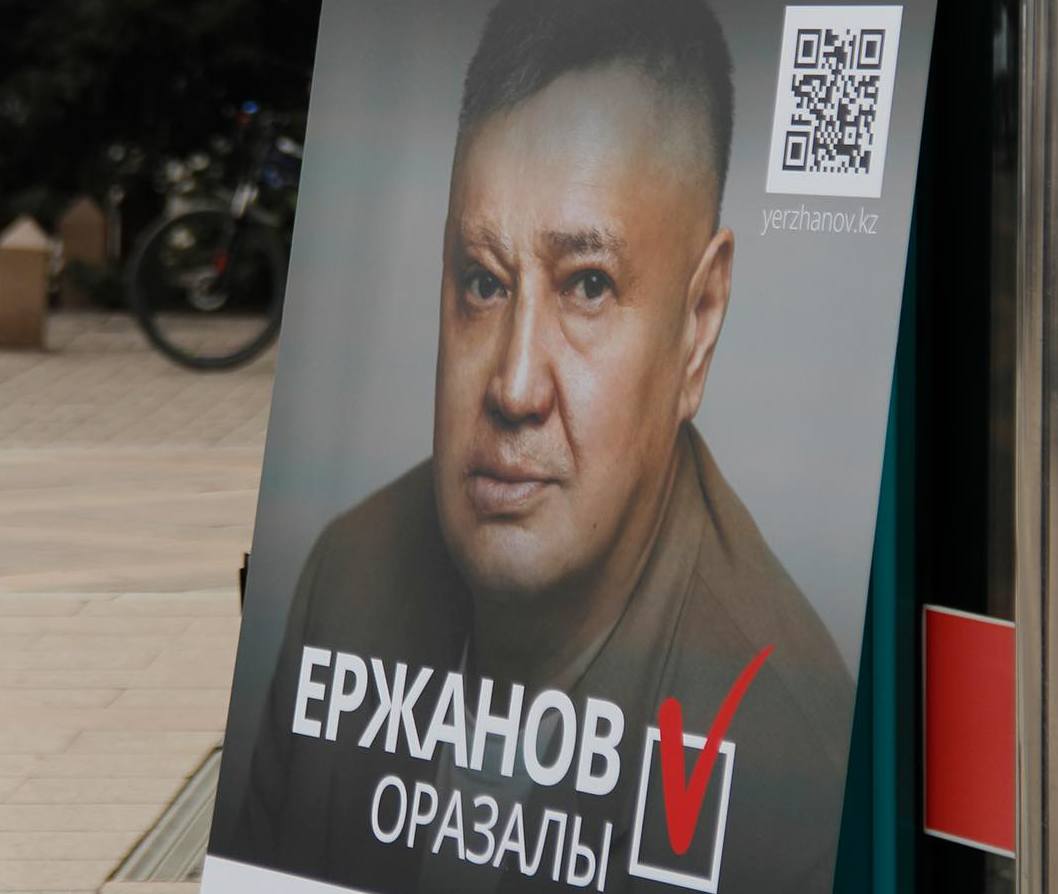
On February 23, 2026, public activist Orazaly Erzhanov was detained by law enforcement authorities. On February 25, the Specialized Interdistrict Investigative Court of Almaty, without presenting a formal suspicion and without qualifying his actions under articles of the Criminal Code of the Republic of Kazakhstan (CC RK), imposed on him, in accordance with Article 139 of the Criminal Procedure Code of the Republic of Kazakhstan (CPC RK), a preventive measure in the form of detention for a period of 10 days.
On February 28, the defense counsel, within the procedural time limits and in compliance with the requirements of procedural law, filed a complaint under Article 107 of the CPC RK challenging the legality of the ruling on the preventive measure. To date, this complaint has not been considered by the Almaty City Court.
Yesterday, on March 5, 2026, after 19:00, literally one hour before the expiration of the 10-day detention period of Erzhanov (which was due to expire at 20:50), the Specialized Interdistrict Investigative Court of Almaty, in an open court hearing, imposed on him a preventive measure in the form of detention for a period of two months.
Erzhanov’s actions have been classified under Paragraph 3 of Part 2 of Article 150 of the Criminal Code of the Republic of Kazakhstan, namely: obstructing the free exercise by a citizen of his electoral rights or the right to participate in a referendum, committed by a group of persons by prior conspiracy or by an organized criminal group.
According to the ruling of the investigative court, the basis for this was a “post calling to boycott the referendum through the EGOV application via the ‘eOtinish’ link, to submit an appeal to the Central Election Commission of the Republic of Kazakhstan containing a statement in which a citizen of the Republic of Kazakhstan refuses the holding of the referendum” (spelling and stylistic features reproduced from the original text of the ruling).
In addition, substantiating the necessity of imposing detention as a preventive measure, the investigative court indicated that the suspect “may continue to publish posts on social networks calling for a boycott of the referendum, which may lead to a negative opinion in society about the referendum” (spelling and stylistic features reproduced from the original text of the ruling).
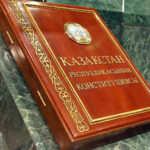
Paragraph 1 of Article 20 of the Constitution of the Republic of Kazakhstan guarantees everyone freedom of speech.
According to Paragraph 1 of Article 7 of the Constitutional Law of the Republic of Kazakhstan “On the Republican Referendum,” citizens are guaranteed the right to express their opinion on the issue(s) submitted to the referendum.
According to Article 28 of the Constitutional Law of the Republic of Kazakhstan “On Elections in the Republic of Kazakhstan,” citizens are guaranteed the right to freely campaign for or against a particular candidate or political party.
This applies both to campaigning or expressing one’s own opinion regarding issues submitted to a referendum and to participation in the referendum itself.
The Commentary to the Criminal Code of the Republic of Kazakhstan (ed. by I.Sh. Borchashvili) notes that “obstruction means the creation of various obstacles. In particular, such actions of the offender as exerting any influence on a citizen exercising his electoral rights, which prevents his free expression of will in elections, may be regarded as obstructing the free exercise by a citizen of his electoral rights. For example: removing candidates from participation in an election campaign; creating obstacles or difficulties in the nomination of specific candidates; refusing to issue a certificate granting the right to vote in connection with a change of place of residence.
Obstruction of a citizen’s right to participate in a referendum consists in counteracting the activities of an initiative group or unlawfully restricting a citizen’s right to participate in a referendum. For example: opposing the creation or activities of an initiative group for holding a referendum; unlawfully excluding citizens from the list of respondents, etc.”
Thus, obstruction implies certain actions by an individual or a group of persons that either directly restrict citizens’ right to participate in a referendum or directly or indirectly limit the free exercise of the right to participate or not participate in a referendum.
In our opinion, such actions may include, among other things, formal or informal instructions to participate in the referendum and to vote in a certain way, issued by the leadership or officials of state bodies, educational and healthcare institutions, or other legal entities. In our view, such actions may contain elements of a criminal offense provided for in Article 150 of the Criminal Code of the Republic of Kazakhstan.
However, in the actions of Mr. Erzhanov, who called for non-participation in the referendum, including its boycott, and proposed various forms of such non-participation, there is, in our opinion, no obstruction of the free exercise by citizens of their right to participate in the referendum. This is an expression of his own opinion, with which some citizens may agree and others may not. At the same time, citizens may, at their own discretion, either participate in the referendum or refuse to participate in it. This is their constitutional right to freely express their will.
In addition, when choosing the preventive measure, both in the first and in the second instance, the investigative court refused to take into account the requirements of the legislation and the objections based on them raised by Erzhanov and his defense counsel.
As a general rule, detention may be applied if a person is suspected of committing a crime punishable by imprisonment for more than five years, and when other, less restrictive preventive measures cannot be applied.
The maximum punishment under Paragraph 3 of Part 2 of Article 150 of the Criminal Code of the Republic of Kazakhstan is imprisonment for up to four years, and this criminal offense belongs to the category of crimes of medium gravity.
According to Article 147 of the CPC RK, in exceptional cases a preventive measure in the form of detention may be applied to a person suspected of committing a crime punishable by imprisonment for up to five years if: he does not have a permanent place of residence in the territory of the Republic of Kazakhstan; his identity has not been established; he has violated a previously imposed preventive measure or other procedural coercive measure; he attempted to abscond or has absconded from the criminal prosecution authorities or the court; he is suspected of committing a crime as part of an organized group or criminal community (criminal organization); he has a previous conviction for a serious or especially serious crime; or there is information that he continues his criminal activity.
In practice, almost none of the circumstances listed above in the law apply to the situation of Erzhanov. Even if it is assumed that the pre-trial investigation authority fears that Erzhanov will continue to disseminate information about boycotting the referendum—which is apparently considered by the investigation and the court as “criminal” activity—these concerns could have been eliminated by imposing certain obligations on the suspect if a milder preventive measure had been chosen, for example bail or house arrest. However, the court refused to grant all motions of the defense and the suspect to impose any preventive measure not involving deprivation of liberty.
The suspect and his defense intend to appeal what they consider a completely unlawful and unfounded decision of the investigative judge to the Almaty City Court within the time limits established by law.
The Kazakhstan International Bureau for Human Rights and Rule of Law plans to appeal to the UN Working Group on Arbitrary Detention and to the UN Special Rapporteur on the promotion and protection of the right to freedom of opinion and expression regarding the violation of Mr. Erzhanov’s rights to freedom of expression and to be free from arbitrary arrest.