While women are celebrated on this day, feminists are far less so, and beneath the abundance of flowers offered, Kazakhstan hides a very different face.
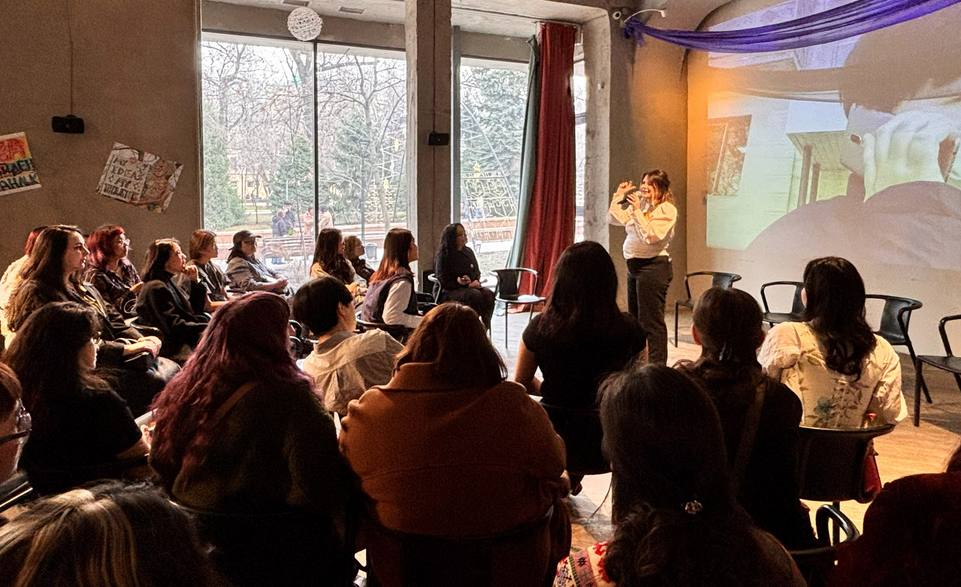
This March 8, on the occasion of International Women’s Day, nearly a hundred people gathered in Almaty at a private venue, at the initiative of organizers of previous feminist marches and rallies. Together, participants created a feminist vision board made of photos, stickers, and slogans, imagining a march through the streets of Almaty. As the event’s organizers explained, participants also signed and sent around fifty postcards—featuring images of past marches and rallies—to the akimat (municipal administration).
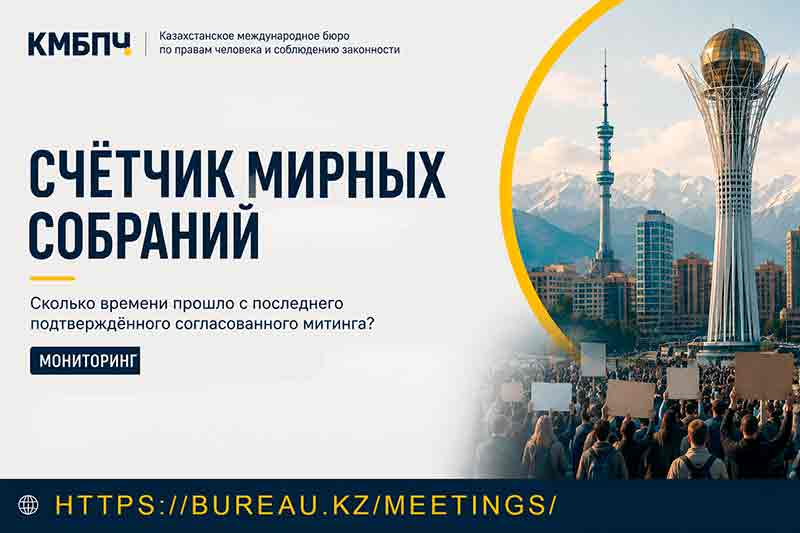
In the broader context of restrictions on freedom of protest and freedom of assembly—as illustrated by the mere four spaces where the administration allows such public gatherings—the feminist cause is no exception; it faces even greater obstacles. After the events of January 2022 and the brief breeze of freedom that swept across the Kazakh steppe, Almaty hosted in March of that same year the only peaceful walking demonstration in the entire history of independent Kazakhstan. The country has followed a different trajectory from other post-Soviet states : in Moldova, for example, a march marking March 8 has been organized every year for more than a decade.
Since 2022, it has become commonplace for the administration to veto requests for marches and peaceful gatherings in support of women’s rights, with around ten refusals issued each year by the akimat. For the fourth year in a row, the same refrain is heard: “Peaceful assemblies on the declared topic threaten public order,” even though no violations of public order have ever been officially recorded during events organized by Almaty’s feminists. The akimat justifies its decisions by citing complaints from certain citizens who are dissatisfied with the feminist agenda.
The connections between the akimat and the women who came to disrupt the meeting are also troubling. Among them was Bibinur Sheralieva, a member of the regional public council on family and social protection under the ruling Amanat party and founder of the NGO “Rahym Social House,” also known as the Family Support Center, created with the support of the Bostandyk district akimat in Almaty. Asem Issayeva and Dilnar Insenova—employees of this center and participants in a rally approved by Almaty authorities (Kazakh feminism apparently operating at two speeds) on March 7, 2024, in Gandhi Park—as well as several self-described defenders of family values, were also present. Shouting, threats of retaliation (including burning the organizers), interruptions of speakers who were discussing the history of March 8, refusal to leave a private space, unfounded accusations of breaking the law, and close-up filming of participants… it is safe to say that female solidarity was not on display.
Police were eventually called by the organizers to remove the disruptors, and the event was able to continue without further incident.
The program included discussions on women’s health, women’s right to peaceful assembly, and violence against women and children—an issue that remains deeply concerning despite state prevention campaigns. One speaker, a psychotherapist from Almaty, stated that one out of every two women among her patients had been a victim of either harassment or domestic violence. Since the criminalization of stalking in September 2025, 79 women across the country have reported cases to the police, but only 11 have reached the courts.
Although this incident may appear anecdotal, it is in fact symptomatic of a much deeper problem. As the World Economic Forum’s annual Global Gender Gap Report (covering 148 countries) reminds us, Kazakhstan will need 123 years to close the gender gap.
Previously, feminist and LGBT organisations in Kazakhstan have constantly faced intolerance from individuals and organisations close to the authorities. Even in cases of physical attacks, the police never respond to the attackers and instead prosecute the activists. In addition, all public feminist and LGBT actions are effectively banned. Government officials, MPs and civil servants can openly express their intolerance towards people with non-traditional sexual orientations and feminist agendas.