On February 23, the UN Human Rights Committee requested that Kazakhstan refrain from extraditing Mansur Movlaev to Russia until his complaint has been examined. While the Chechen activist has had the chance to see his case taken up by the Committee, the same cannot be said for all the other extradition requests that have been pouring into Astana in recent weeks.
Kazakhstan, officially a non-belligerent country in the Russian-Ukrainian conflict, appears to have prepared a particular “gift” to mark the entry into this fifth year of war: responding favorably to extradition requests concerning deserters, activists, and others fleeing mobilization and repression. A gift for whom? The answer, in any case, calls into question the neutrality of the Land of the Nomads.
Kazakhstan temporarily opens its doors to Russian opponents of the war
After Russia launched a full-scale war against Ukraine, Kazakhstan became one of the main destinations for Russian citizens leaving the country. Among them are political activists, journalists, human rights defenders, as well as men evading mobilisation or who have deserted their military units. In the first few months, the influx was massive, with hundreds of thousands of people crossing the border. However, over time, many of them began to wonder how safe and sustainable their stay in Kazakhstan would be.
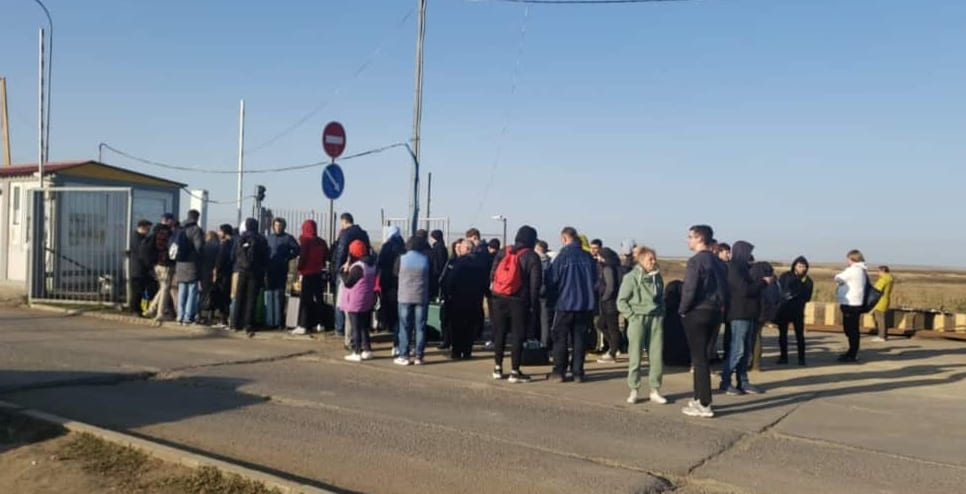
In the first few months after 24 February 2022, Kazakhstan did not impose any special restrictions on Russians. The visa-free regime continued to operate, and entry was free. In the autumn, after Russia announced a ‘partial mobilisation,’ hundreds of thousands of people entered the country in a short period of time.
Astana’s official position at the time boiled down to several points:
– Kazakhstan complies with its international obligations and will not deport people if they face political persecution.
– Russian citizens are in the country legally.
– Extradition issues will be considered strictly within the legal framework.
The public rhetoric of the leadership was restrained, but without demonstrative support for the repressive actions of the Russian Federation. This was perceived as a signal of relative safety, especially for anti-war activists and those evading mobilisation.
One approach to all cases
If Movlaev’s case has drawn the attention of the Committee, it is far from isolated and may soon become anecdotal given the growing number of extraditions in recent weeks.
Among the most affected by these forced returns are military deserters. In this first category, one can mention the case of Semyon Bazukov, a Russian serviceman. After deserting due to his refusal to fight in Ukraine and seeking asylum in Kazakhstan, he was extradited to Russia on January 29.
Yevgeny Korobov, another Russian serviceman, took part in combat operations at the beginning of the war before escaping in Kazakhstan. However, his request for refugee status was denied by a Kazakh court on February 5, and he now faces forced return to Russia, even though Kazakh human rights defenders insist that he be given the opportunity to leave for a third country.
A final example illustrating how deserters are treated in Kazakhstan is the case of Zelimkhan Murtazov, a Russian Chechen assigned to dig trenches. In the third year of such service, while on short-term leave, he attempted to flee to Turkey. After Turkish border guards denied him entry, he was redirected to Kazakhstan, where he arrived at Astana’s international airport on December 29 of last year. He has been living for the past month and a half in the transit zone under the constant threat of being sent back to Russia, as he was not permitted to enter the country there either.
The second category of those facing extradition concerns political opponents, whether of Putin’s regime or of Kadyrov’s rule.
On January 29, Kazakhstan’s General Prosecutor’s Office approved the Russian authorities’ request for the immediate extradition of two opponents of the Putin regime.
One of them is Yulia Emelyanova, a former staff member of Alexei Navalny’s St. Petersburg headquarters, who has been held in Almaty’s pre-trial detention center since October 2025.
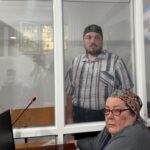
The other is Mansur Movlaev. Persecuted in his homeland for protesting against Kadyrov’s mafia-style regime and the war in Ukraine, he has been held in the same detention center since May 2025. As reported by Current Time, in 2020 Mansur Movlaev was convicted in a drug-related case that Chechen activists Ibragim and Baysangur Yangulbayev claim was fabricated. He was released on probation in 2022 but was abducted in August of that same year by officers of the Shali District Department of Internal Affairs in Chechnya and detained in one of the region’s secret prisons. After escaping and illegally entering Kyrgyzstan — which he eventually left in 2023 for fear of being extradited to Russia — he arrived in Kazakhstan hoping to find refuge. Meanwhile, his brothers Zelimkhan and Khamzat were abducted last year in Chechnya in order to put pressure on him. In his homeland, Movlaev is listed on the federal wanted list on charges of extremism — a designation that hardly suggests humane treatment in the event of his return.
The prosecutor’s decisions are currently being appealed in administrative courts, offering some hope that Emelyanova and Movlaev will not be deported, at least until the legal proceedings are concluded.
Bringing fabricated charges and prosecuting individuals for trivial offenses is becoming increasingly common, as Kazakhstan appears to be taking inspiration from its neighbor.
On February 1, 2026, the young IT specialist Alexander Kachkurkin — a Crimean who insisted on retaining his Ukrainian citizenship after arriving in Almaty following Russia’s 2014 annexation of Crimea — was extradited to Russia. He had lived for three years in Kazakhstan’s southern capital without any claims against him. However, on the last day of January, such claims suddenly emerged. Almaty police accused him of jaywalking and brought him before the interdistrict court for administrative offenses, which imposed a nominal fine. On this basis, he was extradited the same day. Upon arrival in Moscow, he was arrested on the plane’s gangway by FSB agents and placed in pre-trial detention on charges of treason.
This third category of extraditions — concerning neither direct political opponents nor deserters — raises a pressing question: is Kazakhstan truly not participating in Russia’s aggressive war against Ukraine, or is it in fact participating, acting as an unofficial ally of Russia?
Legal status: temporary and uncertain
Most Russians who arrived entered Kazakhstan under the visa-free regime and were granted temporary residence. However, this status does not equate to protection. For political refugees and deserters, the issue of legalisation remains difficult: the procedure for obtaining asylum in Kazakhstan is not easy, and its application in practice is extremely limited. Only a few people are granted refugee status.
In the early days after Russia’s aggression against Ukraine, Kazakhstan tried to sit on the fence. On the one hand, bilateral obligations require Kazakhstan to extradite those who are recognised as criminals in neighbouring countries. However, under Kazakh law, discrediting the Russian army and transferring funds to the Ukrainian military is not a crime. Therefore, when extradition requests were granted, individuals wanted by Russia were held in Kazakh detention centres for up to a year, after which they were allowed to leave the country on their own or, with the help of human rights activists, move to safe locations.
However, with the arrival of Russian deserters in Kazakhstan and increased pressure from its neighbour, Astana’s policy has changed. Whereas in 2022 Kazakhstan was perceived as a relatively safe ‘safe haven’, it is now more of a temporary refuge with legal risks. There is still room to live, but in reality there are few guarantees of long-term protection.
IMAGE: Screenshot from a 2022 video showing a queue of Russians rushing to Kazakhstan after the announcement of partial mobilisation.